
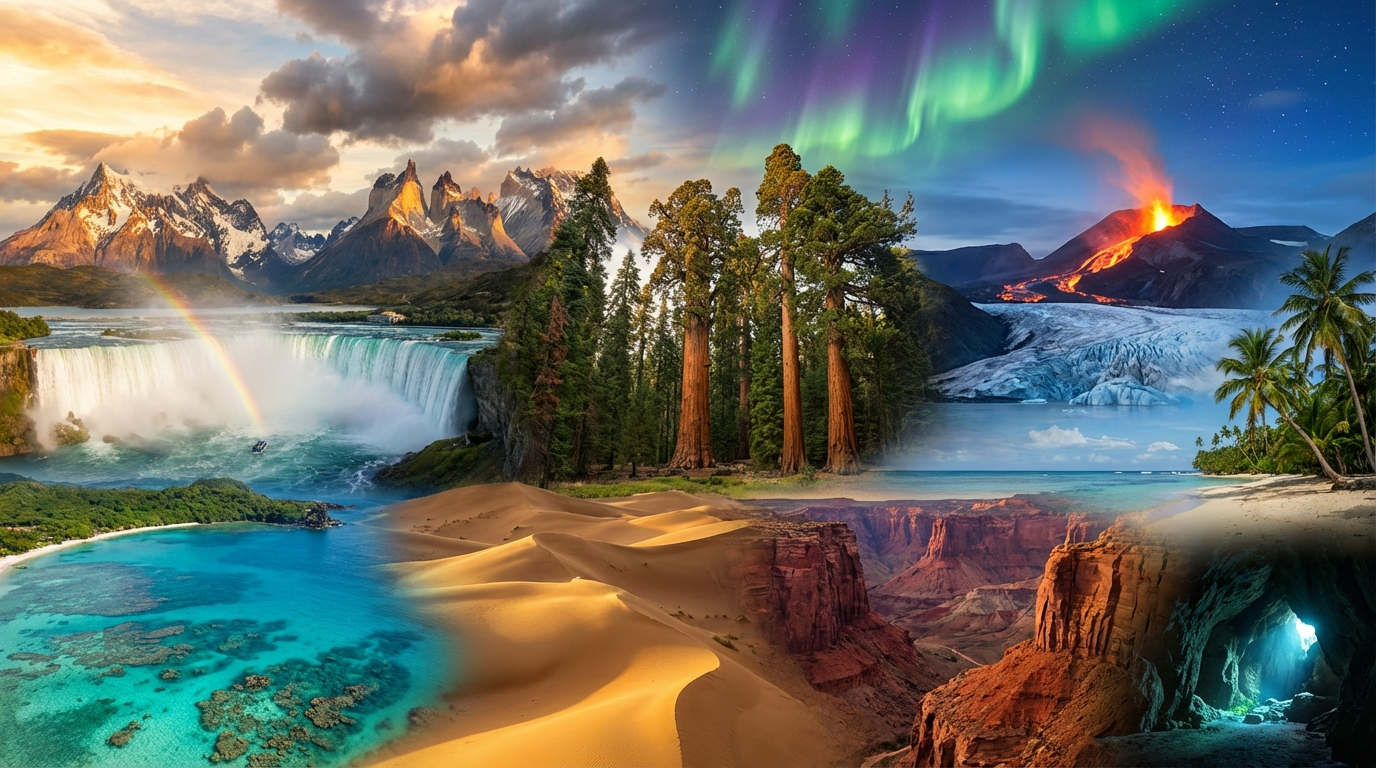
The world is filled with extraordinary landscapes. However, only a few places truly redefine how we see nature. Beautiful Natural Wonders capture raw power, dramatic scenery, and timeless beauty in ways no human-made structure can match.
From towering waterfalls to vast coral reefs, these sites inspire millions of visitors each year. Moreover, they remind us of Earth’s incredible diversity. Because nature constantly evolves, these wonders continue to amaze scientists and travelers alike.
In this guide, we explore five breathtaking destinations that stand out among the most Beautiful Natural Wonders on the planet. Each one offers a unique blend of geology, climate, and visual impact.
Why Natural Wonders Matter
Natural landmarks shape culture and identity. For example, many communities build traditions around nearby landscapes. Additionally, tourism driven by scenic destinations supports local economies.
These sites also teach valuable lessons about climate and conservation. Because ecosystems remain fragile, protecting them becomes essential. As a result, awareness of Beautiful Natural Wonders encourages environmental responsibility.
Furthermore, spending time in nature improves mental well-being. Studies show that exposure to natural scenery reduces stress and enhances creativity. Therefore, visiting these iconic locations benefits both individuals and communities.
Now, let’s explore five stunning places that consistently rank among the world’s most Beautiful Natural Wonders.
1. Grand Canyon, United States
The Grand Canyon stretches across Arizona with dramatic scale. Carved by the Colorado River over millions of years, it showcases layers of geological history.
A Geological Masterpiece
The canyon spans over 277 miles in length. Moreover, its depth reaches more than a mile in certain areas. Because erosion exposed ancient rock layers, scientists study its formations to understand Earth’s past.
Sunrise and sunset create shifting colors across the cliffs. As a result, photographers capture endless variations of the same landscape.
An Icon of Natural Power
Despite its harsh terrain, wildlife thrives in the region. Desert bighorn sheep and California condors inhabit the area. Therefore, the canyon represents both resilience and grandeur.
Among all Beautiful Natural Wonders, the Grand Canyon remains one of the most visited and admired worldwide.
2. Great Barrier Reef, Australia
The Great Barrier Reef stands as the largest coral reef system on Earth. Stretching over 1,400 miles, it contains thousands of individual reefs.
Underwater Biodiversity
This marine ecosystem hosts vibrant coral formations and countless fish species. Additionally, sea turtles and reef sharks inhabit its waters.
Because coral reefs protect coastlines and support marine life, their preservation proves essential.
Environmental Significance
Climate change threatens coral health globally. Consequently, conservation programs aim to restore damaged sections.
As one of the most Beautiful Natural Wonders, the Great Barrier Reef highlights both beauty and environmental urgency.
3. Mount Everest, Nepal and China
Mount Everest towers above the Himalayas as the highest point on Earth. Its summit reaches 29,032 feet above sea level.
A Symbol of Human Ambition
Climbers from around the world attempt to conquer Everest. Although the journey remains dangerous, the challenge attracts adventurers each year.
Because weather conditions shift rapidly, preparation proves crucial.
Majestic Himalayan Views
The surrounding mountain range enhances Everest’s dramatic presence. Snow-covered peaks stretch endlessly across the horizon.
Among all Beautiful Natural Wonders, Everest represents strength, perseverance, and natural dominance.
4. Victoria Falls, Zambia and Zimbabwe
Victoria Falls delivers one of the most powerful waterfall displays on the planet. Locally known as “The Smoke That Thunders,” it lives up to its name.
Unmatched Water Volume
The Zambezi River plunges over a mile-wide cliff. Consequently, mist rises high into the sky, visible from miles away.
During peak season, the roar of falling water echoes across the landscape.
A Spectacular Natural Show
Rainbows often appear within the mist. Therefore, visitors experience constantly changing visual effects.
Because of its immense scale and energy, Victoria Falls consistently appears on lists of Beautiful Natural Wonders.
5. Northern Lights, Arctic Regions
Unlike fixed landmarks, the Northern Lights offer a moving spectacle. Also known as the Aurora Borealis, this phenomenon lights up polar skies.
Celestial Light Displays
Solar particles interact with Earth’s magnetic field. As a result, vibrant green and purple lights ripple across the sky.
The display changes nightly, making each viewing unique.
A Rare and Magical Experience
Clear winter nights provide the best visibility. Although sightings depend on solar activity, travelers flock to Arctic regions hoping for a glimpse.
Among Beautiful Natural Wonders, the Northern Lights offer one of the most surreal experiences on Earth.
The Role of Conservation
Preserving natural landmarks requires global effort. Pollution, climate change, and over-tourism threaten delicate ecosystems.
However, governments and environmental groups implement protective measures. Sustainable tourism practices also reduce impact.
Because future generations deserve to experience these landscapes, conservation remains vital. Protecting Beautiful Natural Wonders ensures their survival.
How Nature Shapes Human Perspective
Natural beauty influences art, literature, and spirituality. Many cultures view landscapes as sacred spaces.
Moreover, breathtaking scenery fosters humility. Standing before towering cliffs or endless oceans reminds people of nature’s scale.
Therefore, exploring Beautiful Natural Wonders expands personal perspective and appreciation for the planet.
Travel Tips for Visiting Natural Landmarks
Planning ahead improves any travel experience. First, research seasonal weather conditions.
Second, respect local regulations. Because some areas limit visitor numbers, booking in advance helps.
Third, practice responsible tourism. Avoid littering and follow designated paths.
By preparing properly, travelers protect these extraordinary destinations while enjoying their beauty.
Why These Five Stand Out
Thousands of remarkable landscapes exist worldwide. Yet, these five offer unmatched diversity.
The Grand Canyon showcases geological depth. The Great Barrier Reef reveals underwater ecosystems. Mount Everest highlights elevation extremes. Victoria Falls demonstrates raw water power. The Northern Lights provide celestial wonder.
Together, they represent different climates and continents. Consequently, they define the meaning of Beautiful Natural Wonders across the globe.
Conclusion: Earth’s Most Breathtaking Creations
The planet offers endless beauty. However, certain places rise above all others. These five destinations reveal Earth’s strength, artistry, and diversity.
Each location provides unique experiences. Moreover, they inspire awe and respect.
As climate challenges increase, protecting these treasures becomes even more important. Therefore, responsible exploration matters.
Visiting Beautiful Natural Wonders creates lasting memories. More importantly, it deepens appreciation for the world we share.
When we protect these landscapes, we preserve stories written by nature itself. Ultimately, the most Beautiful Natural Wonders remind us how extraordinary our planet truly is.
FAQ
1. What qualifies as a natural wonder?
A natural wonder features extraordinary geological or environmental characteristics that stand out globally.
2. Are these destinations safe for travelers?
Yes, most offer guided tours and safety measures, though preparation remains essential.
3. How can travelers reduce environmental impact?
Follow local rules, avoid littering, and choose eco-friendly accommodations whenever possible.
4. When is the best time to see the Northern Lights?
Winter months in Arctic regions provide the highest visibility due to long, dark nights.
5. Why is conservation important for global landmarks?
Preservation protects ecosystems, supports biodiversity, and ensures future generations can experience these remarkable places.