
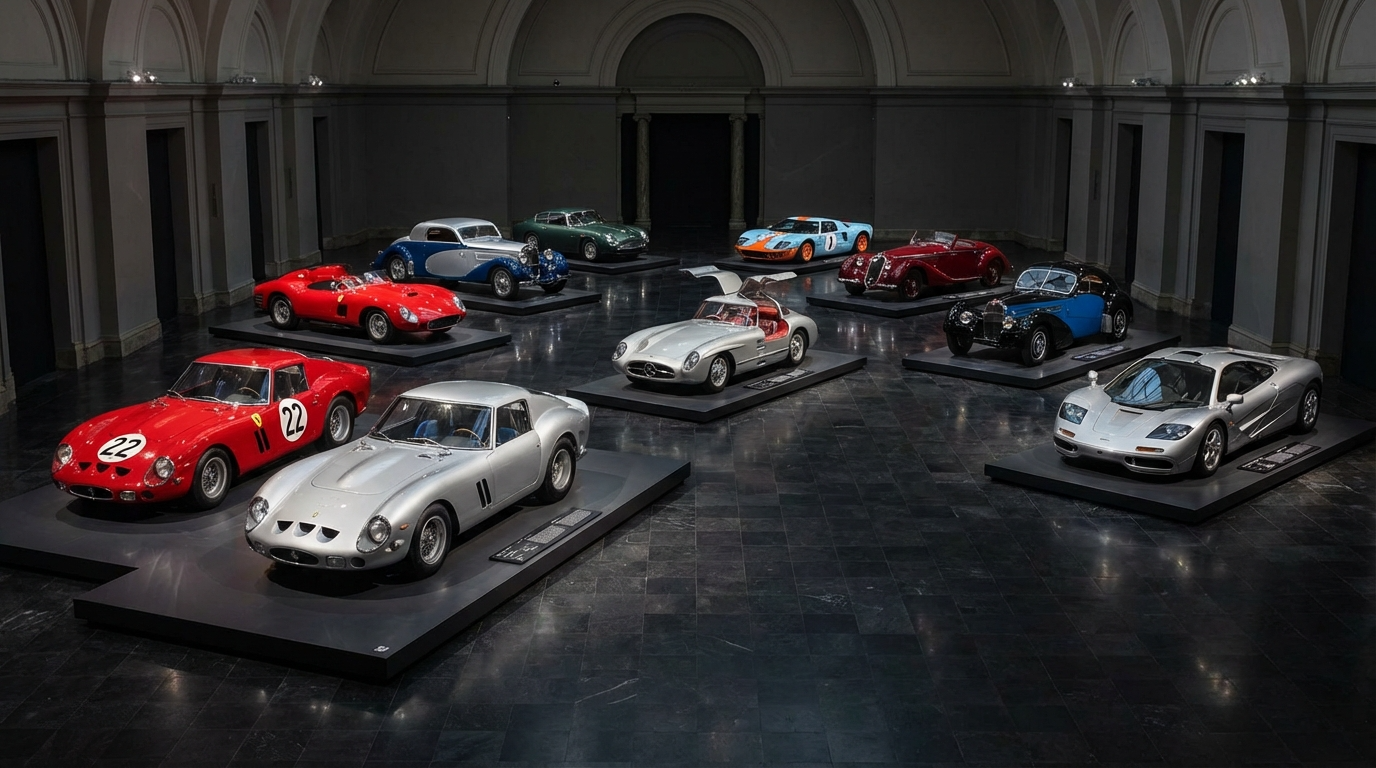
The most expensive cars ever sold represent far more than transportation. They symbolize history, engineering brilliance, and unmatched exclusivity. While modern supercars command high prices, record-breaking auction sales often involve rare classics.
Collectors compete fiercely for iconic models. Because scarcity drives demand, values skyrocket when legendary vehicles appear on the market. Additionally, racing heritage and celebrity ownership increase desirability.
Although many luxury cars cost millions, only a handful reach historic price levels. Therefore, examining the most expensive cars reveals how passion and prestige influence the collector market.
Let’s explore five extraordinary vehicles that achieved staggering auction results.
What Makes a Car Worth Millions?
Before diving into the most expensive cars ever sold, it helps to understand value drivers. Rarity stands at the top. Limited production models attract intense interest.
Provenance also matters. Cars owned by famous drivers or historical figures often command premiums. Moreover, racing success dramatically boosts appeal.
Condition plays a crucial role. Original parts and documented restoration add credibility. Consequently, collectors carefully verify authenticity before bidding.
Furthermore, brand reputation influences final price. Ferrari, Mercedes-Benz, and Bugatti dominate high-end auctions. Because these manufacturers shaped automotive history, their rare models become blue-chip investments.
Now, let’s examine the vehicles that reached extraordinary price records.
1. 1955 Mercedes-Benz 300 SLR Uhlenhaut Coupe
The 1955 Mercedes-Benz 300 SLR Uhlenhaut Coupe ranks among the most expensive cars ever sold. In 2022, one example reportedly sold for approximately $142 million.
Originally designed as a racing prototype, only two units were built. Consequently, extreme rarity fueled competition. The car’s engineering reflected Formula 1 innovation of its era.
Unlike typical auction sales, this transaction occurred privately through a curated event. However, its record-breaking price stunned the automotive world.
Because of its historical significance and limited production, the Uhlenhaut Coupe stands at the pinnacle of automotive value. It represents both performance heritage and exclusivity.
2. 1962 Ferrari 250 GTO
When discussing the most expensive cars in auction history, the Ferrari 250 GTO always appears. In 2018, one model sold for over $48 million at public auction.
Ferrari produced only 36 examples. Moreover, the 250 GTO dominated racing circuits during the early 1960s. Its track record significantly enhanced prestige.
Collectors view it as the ultimate Ferrari. Additionally, its elegant design continues to inspire admiration decades later.
Because Ferrari maintains strong brand loyalty, competition remains fierce whenever one surfaces. As a result, values consistently remain among the highest in automotive history.
3. 1957 Ferrari 335 S
Another Ferrari joins the list of most expensive cars ever sold. The 1957 Ferrari 335 S fetched roughly $35 million at auction.
This model boasts racing pedigree from endurance events such as the Mille Miglia. Consequently, collectors appreciate both performance and heritage.
Unlike purely road-focused vehicles, the 335 S embodies motorsport glory. Its powerful V12 engine represented advanced engineering for its time.
Because of its competitive success and limited production numbers, bidders eagerly pursued ownership. Ultimately, its price reflected historical importance and mechanical excellence.
4. 1964 Ferrari 275 GTB/C Speciale
Ferrari appears again among the most expensive cars in history. The 1964 Ferrari 275 GTB/C Speciale sold for approximately $26 million.
Only three units were produced. Therefore, scarcity significantly influenced its valuation. Additionally, its lightweight construction enhanced racing capability.
Collectors admire its blend of beauty and performance. Moreover, originality and careful preservation strengthened its appeal.
Although newer hypercars may boast greater horsepower, classic Ferraris maintain unmatched mystique. As a result, demand continues rising.
5. 1956 Aston Martin DBR1
The 1956 Aston Martin DBR1 rounds out our list of most expensive cars ever sold. In 2017, it achieved a price exceeding $22 million.
This particular model won the 1959 24 Hours of Le Mans. Because of its racing triumph, historical importance increased dramatically.
Unlike many road cars, the DBR1 symbolizes motorsport achievement. Its design reflects British engineering excellence.
Collectors value both its racing success and limited production. Consequently, it remains one of Aston Martin’s most prized creations.
Why Ferrari Dominates the Auction Market
Ferrari consistently appears among the most expensive cars sold worldwide. Several factors explain this dominance.
First, Ferrari limited production numbers intentionally. Scarcity ensures long-term value. Second, racing heritage strengthens brand prestige.
Additionally, Ferrari cultivates exclusivity through selective ownership programs. Consequently, demand often exceeds supply.
Furthermore, collectors trust Ferrari’s historical consistency. Over decades, its models appreciated steadily.
Because of these reasons, Ferrari models frequently set auction records.
Classic Cars vs. Modern Hypercars
Modern hypercars often cost millions when new. However, they rarely surpass classic auction records.
Classic models offer nostalgia and historical context. Additionally, they represent milestones in automotive development.
Meanwhile, modern hypercars emphasize advanced technology and extreme performance. Although impressive, they lack decades of cultural legacy.
Because emotional connection influences collectors, older models often command higher resale values.
Investment Potential of Rare Vehicles
The most expensive cars frequently serve as investment assets. Unlike traditional investments, rare automobiles provide tangible enjoyment.
Values fluctuate based on market trends. However, historically significant cars often appreciate over time.
Collectors diversify portfolios by acquiring iconic vehicles. Moreover, prestigious auctions attract global investors.
While risks exist, careful research and authentication reduce uncertainty.
Auction Houses and Global Demand
Auction houses such as RM Sotheby’s and Gooding & Company play key roles. They curate high-profile sales and verify authenticity.
Because global wealth has increased, competition intensified. Buyers from Europe, the United States, and Asia actively participate.
Digital bidding platforms expanded access. Consequently, record-breaking prices occur more frequently.
The Emotional Factor Behind Record Prices
Beyond numbers, emotion drives bidding wars. Collectors often pursue childhood dreams or honor racing legends.
When two passionate buyers compete, prices escalate rapidly. Therefore, sentiment sometimes outweighs logic.
Although financial return matters, pride of ownership often motivates final bids.
Conclusion: Machines That Became Masterpieces
The most expensive cars ever sold transcend engineering. They represent art, history, and passion combined.
From Mercedes prototypes to Ferrari legends, each vehicle tells a unique story. Because rarity and heritage shape value, prices continue climbing.
Although not everyone can own such treasures, enthusiasts worldwide admire them.
Ultimately, the most expensive cars prove that automobiles can evolve from machines into cultural icons.
FAQ
- What is the highest-priced car ever sold?
The 1955 Mercedes-Benz 300 SLR Uhlenhaut Coupe holds the current record. - Why do Ferraris sell for such high amounts?
Limited production, racing heritage, and strong brand prestige drive demand. - Are classic cars better investments than modern ones?
Historically significant classics often appreciate more consistently. - How do auction houses verify authenticity?
Experts examine documentation, serial numbers, and restoration records. - Can modern hypercars break future price records?
Possibly, especially if production remains limited and cultural impact grows.