
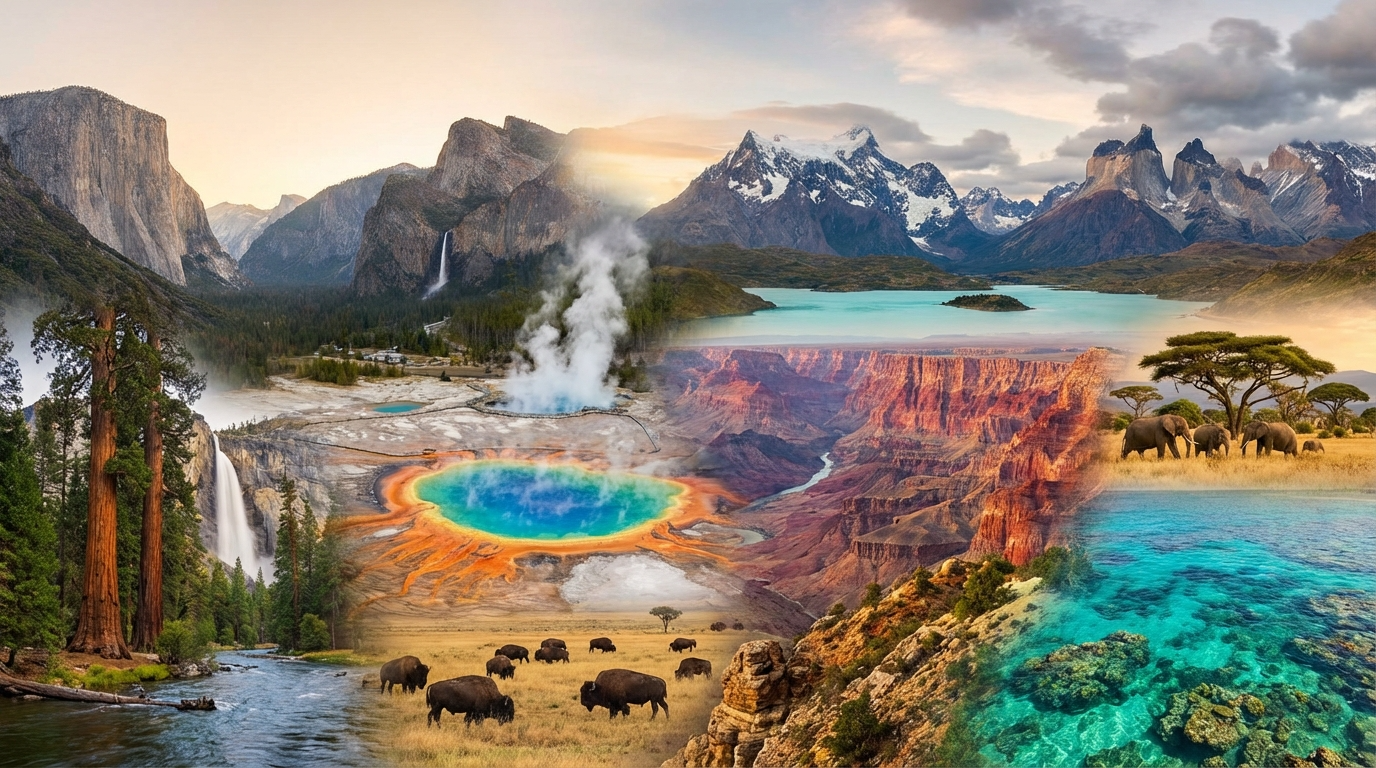
The best national parks capture the raw beauty of nature in ways few places can. Towering mountains, vast deserts, roaring waterfalls, and ancient forests remind us how powerful and diverse our planet truly is. Because these protected areas preserve unique ecosystems, they offer unforgettable experiences for travelers of all ages.
Across the globe, national parks protect landscapes that define countries and cultures. However, a few stand out for their dramatic scenery, rich wildlife, and global recognition. Therefore, visiting at least one iconic park should be on every traveler’s bucket list.
In this guide, you will discover five of the best national parks that combine adventure, accessibility, and natural wonder.
Why National Parks Matter More Than Ever
Before exploring the best national parks, it helps to understand their significance. National parks preserve biodiversity and protect fragile ecosystems. Consequently, they serve as safe havens for wildlife and rare plant species.
Additionally, parks provide educational opportunities. Visitors learn about geology, conservation, and climate patterns. Because these areas remain largely undeveloped, they showcase landscapes in their natural state.
Tourism also supports local economies. However, responsible travel ensures preservation for future generations.
Moreover, national parks promote mental and physical well-being. Spending time outdoors reduces stress and encourages movement. Therefore, exploring protected landscapes benefits both individuals and communities.
Now, let’s look at five extraordinary destinations.
1. Yellowstone National Park (United States)
Yellowstone consistently ranks among the best national parks in the world. Established in 1872, it became the first national park globally.
The park sits atop a volcanic hotspot. As a result, geysers and hot springs dominate the landscape. Old Faithful, one of its most famous geysers, erupts regularly and draws visitors year-round.
In addition to geothermal features, Yellowstone hosts diverse wildlife. Bison, elk, and wolves roam freely across wide valleys.
Because the park spans Wyoming, Montana, and Idaho, it offers varied terrain. Mountains, rivers, and forests create stunning contrasts.
Although summer attracts the most visitors, each season provides unique beauty. Consequently, Yellowstone remains one of the best national parks for first-time explorers.
2. Banff National Park (Canada)
Banff National Park showcases the majestic beauty of the Canadian Rockies. Turquoise lakes, snow-capped peaks, and alpine forests define its scenery.
Lake Louise stands out as one of the most photographed spots. Because glacial minerals give the water its vivid color, the view appears almost surreal.
Outdoor enthusiasts enjoy hiking, canoeing, and skiing throughout the year. Additionally, wildlife such as bears and mountain goats inhabit the region.
The town of Banff offers charming accommodations and restaurants. Therefore, visitors can balance wilderness adventure with comfort.
While many parks impress with size, Banff captivates through visual drama. As a result, it easily earns a place among the best national parks to visit.
3. Serengeti National Park (Tanzania)
Serengeti National Park provides one of the most extraordinary wildlife experiences on Earth. Known for the Great Migration, millions of wildebeest and zebras cross its plains annually.
Because predators follow these herds, visitors often witness lions and cheetahs in action. Safari drives reveal raw natural interactions rarely seen elsewhere.
Vast savannas stretch to the horizon. Meanwhile, acacia trees dot the landscape dramatically.
Unlike many parks focused on hiking trails, Serengeti emphasizes guided wildlife observation. Consequently, professional rangers enhance safety and education.
The scale of life here feels overwhelming. Therefore, Serengeti stands proudly among the best national parks for unforgettable wildlife encounters.
4. Torres del Paine National Park (Chile)
Located in Patagonia, Torres del Paine offers dramatic granite peaks and glacial lakes. The iconic towers give the park its name.
Because strong winds shape the region’s rugged terrain, landscapes feel untamed and powerful. Hikers frequently explore the famous W Trek, which showcases key highlights.
Additionally, glaciers descend into turquoise waters. Wildlife such as guanacos and condors roam freely.
Although remote, improved infrastructure has made access easier. However, weather conditions can change quickly.
For adventurous travelers, this park provides both challenge and reward. As a result, it consistently ranks among the best national parks for epic scenery.
5. Kruger National Park (South Africa)
Kruger National Park combines accessibility with extraordinary biodiversity. Spanning nearly 20,000 square kilometers, it ranks among Africa’s largest reserves.
Visitors often spot the “Big Five” animals: lion, leopard, elephant, rhino, and buffalo. Because roads allow self-driving safaris, exploration feels flexible.
Unlike smaller reserves, Kruger accommodates various budgets. Luxury lodges and basic campsites coexist within the park.
Moreover, conservation programs protect endangered species actively. Therefore, tourism supports preservation efforts directly.
For those seeking a comprehensive safari experience, Kruger stands tall among the best national parks worldwide.
How to Choose the Right Park for You
Selecting from the best national parks depends on personal preferences. Some travelers prioritize wildlife. Others seek mountain vistas or geothermal wonders.
First, consider climate. Certain parks remain accessible year-round, while others close seasonally.
Next, evaluate activity level. Hiking-intensive destinations differ from safari-based parks.
Additionally, research accommodation options. Some parks offer luxury lodges, while others focus on camping.
By aligning expectations with destination strengths, you ensure a rewarding experience.
Responsible Travel and Conservation
Visiting the best national parks requires responsibility. Follow park regulations carefully.
Stay on designated trails to protect fragile ecosystems. Moreover, avoid feeding wildlife.
Reduce waste by carrying reusable containers. Additionally, respect local communities and cultural traditions.
Because climate change affects many parks, sustainable travel choices matter more than ever.
The Emotional Impact of Natural Landscapes
Beyond scenery, national parks inspire reflection. Vast landscapes create perspective.
Many visitors describe feeling humbled by towering peaks or endless plains. Consequently, these experiences foster gratitude.
Spending time in nature also improves mental clarity. Therefore, trips to protected areas often feel transformative.
The best national parks offer more than sightseeing. They create lasting memories and personal growth.
Planning Tips for a Successful Visit
Book accommodations early, especially during peak seasons. Additionally, check park regulations before arrival.
Pack appropriate gear based on climate. For instance, mountain parks require layered clothing.
Research safety guidelines carefully. Wildlife encounters require caution.
Because preparation enhances enjoyment, thoughtful planning ensures smooth travel.
Conclusion: Nature’s Greatest Masterpieces Await
The best national parks showcase Earth’s most extraordinary landscapes and wildlife. From geothermal marvels in Yellowstone to sweeping plains in Serengeti, each destination offers something unique.
Although travel styles differ, these five parks consistently inspire awe. Because they preserve natural heritage, they deserve both admiration and protection.
Ultimately, visiting the best national parks connects us to something larger than ourselves. Whether you seek adventure, tranquility, or education, these iconic destinations promise unforgettable journeys.
FAQ
- What makes a national park truly iconic?
Iconic parks combine unique landscapes, biodiversity, and cultural significance. - When is the best time to visit protected areas?
Timing depends on climate and wildlife patterns in each region. - Are national parks suitable for families?
Yes, many parks offer accessible trails and educational programs. - How can travelers minimize environmental impact?
Follow park rules, reduce waste, and respect wildlife habitats. - Do all parks require guided tours?
Not always. Some allow self-guided exploration, while others recommend guided experiences for safety.