
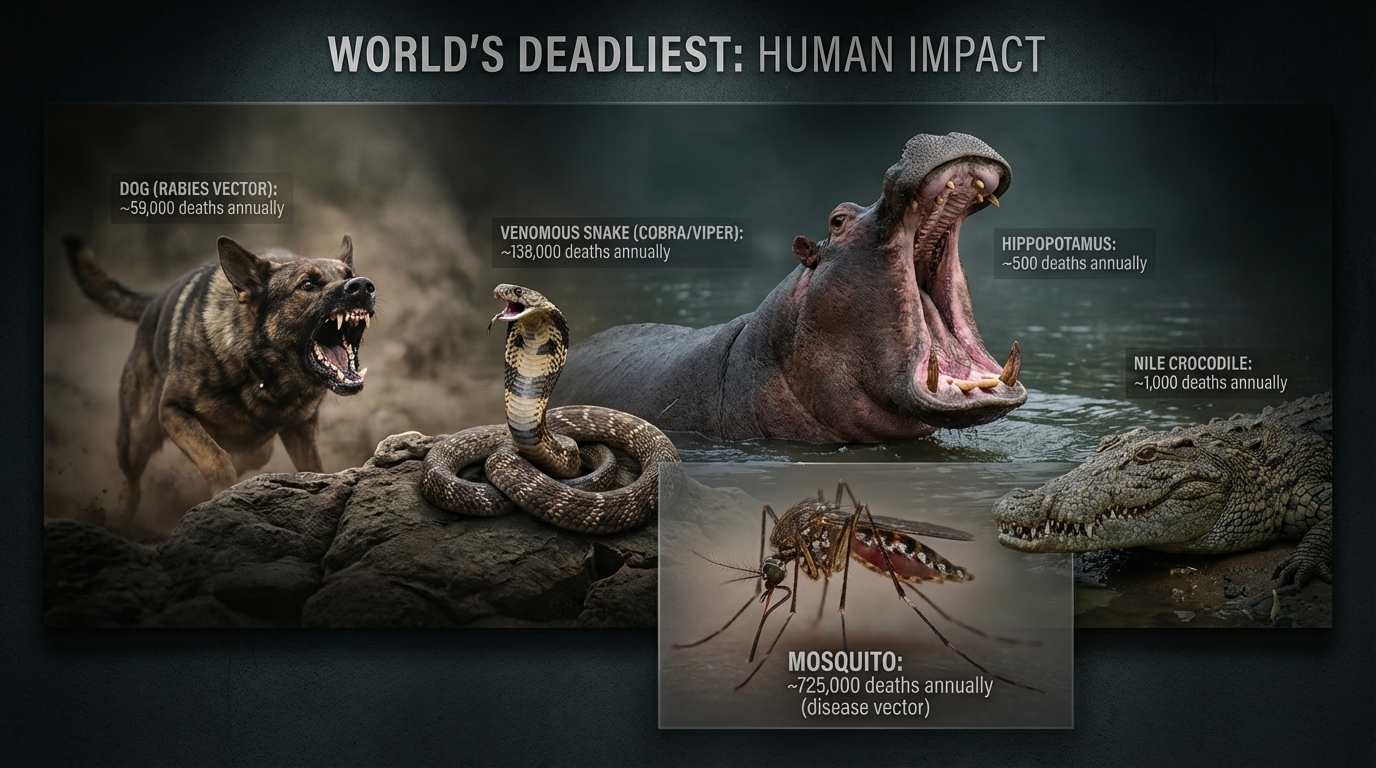
When people think about the deadliest animals on earth, they often imagine sharks, lions, or giant predators from documentaries. However, the truth is far more surprising. In reality, the animals responsible for the most human deaths are often small, quiet, and easily overlooked.
Although Hollywood paints a dramatic picture of nature, statistics tell a different story. Some of the most dangerous creatures are not powerful hunters. Instead, they rely on venom, bacteria, or parasites. Therefore, understanding real risks matters more than fearing dramatic myths.
In this guide, you will discover the top five creatures ranked by the number of human deaths they cause each year. Moreover, you will learn why they are so lethal and how to reduce your risk in everyday life.
How We Define the Most Dangerous Creatures
Before we begin ranking the deadliest animals on earth, we need to clarify one important point. Deadliness is measured by the number of human fatalities caused annually. This approach focuses on impact rather than size, strength, or fear factor.
For example, sharks generate intense media attention. However, they cause very few deaths each year. Meanwhile, smaller animals transmit deadly diseases silently across continents. As a result, public perception often differs from scientific reality.
Additionally, global health data from organizations such as the World Health Organization helps estimate annual fatalities. These numbers fluctuate slightly each year. Still, consistent patterns appear across decades.
Now, let’s examine the top five ranked by real-world impact.
5. Hippopotamus – The Aggressive Giant
At first glance, hippos seem calm and almost comical. Yet appearances can be misleading. In fact, hippopotamuses are responsible for hundreds of deaths annually in parts of Africa.
Unlike predators that hunt humans for food, hippos attack when they feel threatened. Because they are extremely territorial, they defend waterways aggressively. Furthermore, they can run faster than humans on land despite their massive size.
Most incidents occur when people travel by small boats in rivers. If a hippo perceives intrusion, it may charge or overturn vessels. Consequently, fishermen and villagers face serious risk.
Although hippos rank fifth among the deadliest animals on earth, they are not malicious hunters. Instead, their aggression stems from territorial instinct. Therefore, awareness and distance remain key safety measures.
4. Crocodile – The Silent Ambusher
Crocodiles are ancient predators. They have existed for millions of years. Because of their stealth and power, they rank high among lethal wildlife species.
Each year, crocodiles cause around 1,000 human deaths worldwide. Most attacks happen near rivers and lakes in Africa, Asia, and Australia. Unlike hippos, crocodiles actively hunt prey.
Their hunting strategy is simple yet effective. First, they remain almost invisible in murky water. Then, they strike with explosive force. After grabbing prey, they perform a “death roll” to subdue victims.
However, many attacks occur due to proximity. People often bathe, fish, or wash clothes near crocodile habitats. Therefore, understanding local wildlife patterns can dramatically reduce risk.
While they are among the deadliest animals on earth, crocodile attacks are geographically concentrated. As a result, most people globally will never encounter one.
3. Snake – Venom in the Shadows
Snakes cause significantly more fatalities than large mammals. In fact, venomous snakebites result in an estimated 100,000 deaths each year.
Many species deliver potent neurotoxins or hemotoxins. These toxins can paralyze the respiratory system or cause internal bleeding. Without quick medical treatment, victims may die within hours.
Most fatalities occur in rural areas of Asia and sub-Saharan Africa. Farmers and children are particularly vulnerable. Moreover, limited access to antivenom increases mortality rates.
Interestingly, snakes do not seek human confrontation. Most bites happen when someone accidentally steps on or disturbs one. Therefore, wearing protective footwear and using flashlights at night significantly reduces risk.
Because of their global distribution and high fatality numbers, snakes firmly rank among the deadliest animals on earth.
2. Dog – A Familiar but Fatal Carrier
This ranking often surprises people. After all, dogs are beloved companions worldwide. However, they are responsible for tens of thousands of human deaths annually due to rabies transmission.
Rabies is a viral disease that affects the nervous system. Once symptoms appear, survival becomes extremely rare. Unfortunately, in many developing regions, vaccination rates remain low.
Stray dogs play a major role in spreading rabies. Children are especially at risk. Even small bites can transmit the virus. Therefore, immediate medical treatment after any suspicious bite is critical.
Unlike wild predators, dogs live alongside humans. Consequently, their proximity increases transmission opportunities. Although rabies is preventable through vaccination, limited healthcare access continues to drive fatalities.
Because of this disease factor, dogs rank second among the deadliest animals on earth.
1. Mosquito – The Tiny Killer
Surprisingly, the mosquito stands at the top of the list. Despite its tiny size, it causes more human deaths than any other creature on the planet.
Mosquitoes transmit diseases such as malaria, dengue, Zika virus, West Nile virus, and yellow fever. Malaria alone kills hundreds of thousands of people each year.
Unlike predators that rely on physical attacks, mosquitoes function as disease vectors. In other words, they spread pathogens from one host to another. This ability amplifies their impact exponentially.
Warm climates with standing water create ideal breeding conditions. Therefore, tropical and subtropical regions experience the highest mortality rates.
Because of sheer numbers and disease transmission, mosquitoes remain the most lethal species among the deadliest animals on earth.
Why Small Creatures Cause the Most Deaths
It may seem counterintuitive. However, smaller animals dominate fatality statistics. Large predators attack infrequently. In contrast, insects and parasites interact with humans constantly.
Additionally, disease transmission scales rapidly. One mosquito can infect multiple people. Over time, outbreaks spread across entire regions.
Public fear often focuses on dramatic attacks. Yet statistically, infectious disease vectors pose far greater danger. Therefore, prevention efforts prioritize sanitation, vaccination, and mosquito control rather than predator elimination.
Understanding this distinction helps reshape how we think about risk in nature.
How to Reduce Your Risk
Although these creatures rank among the deadliest animals on earth, prevention remains possible.
First, use insect repellent and sleep under treated bed nets in mosquito-prone areas. Second, ensure pets receive rabies vaccinations. Third, wear protective clothing in snake habitats.
Furthermore, avoid swimming in crocodile-infested waters. In regions with hippos, maintain safe distances from riverbanks. Small behavioral adjustments dramatically lower danger.
Education plays a crucial role. When communities understand transmission patterns, death rates decline. For example, malaria prevention campaigns have saved millions of lives over recent decades.
Myths About Lethal Wildlife
Many people assume sharks top the list. However, sharks cause fewer than ten deaths annually. Meanwhile, mosquitoes cause hundreds of thousands.
Similarly, lions and bears generate headlines. Yet they contribute relatively few fatalities compared to disease vectors.
Media portrayal influences perception. As a result, rare but dramatic events overshadow statistically significant threats.
Recognizing these myths allows individuals to focus on realistic prevention strategies rather than exaggerated fears.
The Bigger Picture of Human-Wildlife Interaction
Humans continue expanding into wildlife habitats. Consequently, interactions increase. Deforestation, climate change, and urban growth alter ecosystems.
For instance, warming temperatures expand mosquito breeding zones. Therefore, diseases once confined to tropical areas now appear in new regions.
At the same time, improved healthcare reduces mortality. Vaccination programs, antivenoms, and public education campaigns significantly lower risk.
Ultimately, coexistence requires awareness rather than fear. Nature contains danger. However, knowledge empowers protection.
Conclusion: Understanding the Real Threats
When examining the deadliest animals on earth, perception often clashes with reality. Massive predators rarely top fatality lists. Instead, small disease carriers dominate.
Mosquitoes claim the most lives annually. Dogs spread rabies in vulnerable regions. Snakes, crocodiles, and hippos follow behind.
Nevertheless, most deaths are preventable. With proper healthcare, vaccination, sanitation, and awareness, global fatality numbers can decline.
Fear may capture attention. However, education saves lives. By understanding real risks and taking practical precautions, we can safely share this planet with even the most dangerous creatures.
FAQ
- What animal causes the most human deaths each year?
Mosquitoes cause the highest number of deaths due to diseases like malaria and dengue. - Why are insects more dangerous than large predators?
Insects spread infectious diseases, which can affect thousands or millions of people rapidly. - Are shark attacks common worldwide?
No, shark attacks are extremely rare compared to fatalities from disease-carrying species. - Can snakebite deaths be prevented?
Yes, access to antivenom, protective clothing, and education significantly reduce fatalities. - How can communities lower wildlife-related deaths?
Vaccination programs, mosquito control efforts, sanitation improvements, and public awareness campaigns are highly effective.