
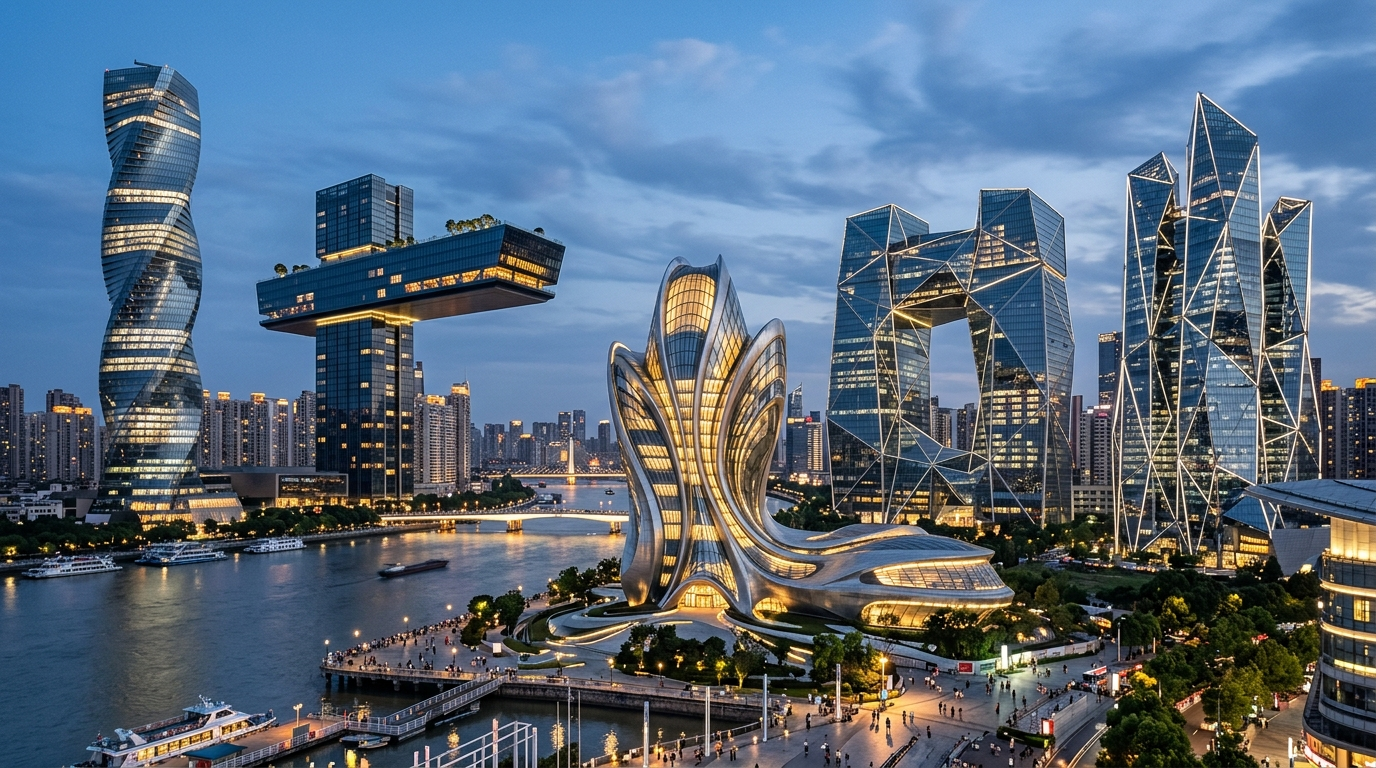
The world of architecture continues to evolve, yet few things capture attention like futuristic buildings unreal in both form and imagination. These structures challenge traditional design and push the limits of what seems possible. As cities grow and technology advances, architects are no longer confined by conventional shapes or materials. Instead, they create buildings that appear almost otherworldly, blending creativity with engineering precision.
What makes these futuristic designs so fascinating is not just their appearance, but the ideas behind them. Many of these projects aim to redefine how people interact with space. They often incorporate sustainability, smart technology, and artistic vision into one seamless concept. As a result, futuristic buildings unreal in structure are not just visually striking, but also highly functional.
The Rise of Visionary Architecture
Modern architecture has shifted toward innovation and experimentation. In the past, buildings focused primarily on practicality. However, designers now aim to create experiences rather than just spaces. Because of this shift, futuristic buildings unreal in appearance have become symbols of progress and creativity.
Additionally, advancements in materials and construction methods have made these designs possible. Lightweight composites, smart glass, and advanced steel frameworks allow architects to build shapes that were once unimaginable. Consequently, these structures often defy gravity or appear to float effortlessly.
Another key factor is urban competition. Cities want to stand out and attract global attention. Therefore, they invest in iconic structures that become landmarks. These buildings not only define skylines but also reflect a city’s ambition and identity. As a result, futuristic buildings unreal in design continue to rise across the world.
1. The Museum of the Future, Dubai
Dubai is known for its bold architectural projects, and the Museum of the Future stands as one of the most futuristic buildings unreal in both concept and execution. The structure features a torus-shaped design with a hollow center, giving it a distinctive and almost surreal look.
The exterior is covered in Arabic calligraphy, which doubles as windows. This design merges culture with innovation, creating a building that feels both futuristic and meaningful. Inside, the museum focuses on emerging technologies and future possibilities, making the experience as forward-thinking as the structure itself.
Moreover, the building uses advanced engineering techniques to achieve its seamless form. Its stainless steel facade reflects light beautifully, enhancing its futuristic appeal. Because of its unique design, it has quickly become one of the most recognizable futuristic buildings unreal in modern architecture.
2. The Lotus Temple, New Delhi
Although completed decades ago, the Lotus Temple still ranks among futuristic buildings unreal in its timeless design. Inspired by the shape of a lotus flower, the structure features 27 marble petals arranged in a symmetrical pattern.
Unlike traditional religious buildings, the Lotus Temple embraces simplicity and openness. It invites people from all backgrounds to gather in a peaceful environment. This universal approach adds to its futuristic feel, as it represents inclusivity and harmony.
Furthermore, the building’s design maximizes natural light and ventilation. Its petal-like structures create a cooling effect, reducing the need for artificial systems. Because of this, it remains both visually stunning and environmentally efficient. Even today, it stands as one of the most futuristic buildings unreal in concept and purpose.
3. The Heydar Aliyev Center, Baku
The Heydar Aliyev Center in Azerbaijan is another masterpiece that exemplifies futuristic buildings unreal in form. Designed by Zaha Hadid, the structure features flowing curves and smooth surfaces that eliminate sharp angles.
From a distance, the building appears to rise from the ground like a wave. Its seamless design creates a sense of movement, making it feel alive. This fluidity sets it apart from traditional architecture, which often relies on rigid lines and symmetry.
Inside, the open spaces continue the theme of fluidity. The interior design complements the exterior, creating a cohesive experience. Additionally, the building hosts exhibitions, conferences, and cultural events, making it a dynamic space.
Because of its innovative design, the Heydar Aliyev Center is widely regarded as one of the most futuristic buildings unreal in the world.
4. The Edge, Amsterdam
The Edge in Amsterdam represents the future of smart buildings. While it may not look as dramatic as others, it is still among futuristic buildings unreal in terms of technology and efficiency.
This office building is considered one of the most sustainable in the world. It uses smart systems to monitor energy usage, lighting, and temperature. Employees can even control their workspace settings through a mobile app.
Moreover, the building generates more energy than it consumes. Solar panels and efficient design contribute to its sustainability. Because of this, it sets a new standard for environmentally friendly architecture.
Although its design is sleek and modern, its true innovation lies in its functionality. Therefore, it remains one of the most futuristic buildings unreal in terms of performance and purpose.
5. The Shanghai Tower, China
The Shanghai Tower is a striking example of futuristic buildings unreal in scale and design. As one of the tallest buildings in the world, it features a twisting structure that reduces wind resistance.
This spiral design not only enhances stability but also creates a unique visual effect. The tower appears to rotate as it rises, giving it a dynamic presence on the skyline. Additionally, its double-skin facade improves energy efficiency by regulating temperature.
Inside, the building includes offices, hotels, and public spaces. Its vertical city concept allows people to live and work within the same structure. This approach reflects the future of urban living, where space is optimized for convenience and sustainability.
Because of its innovative design and functionality, the Shanghai Tower stands among the most futuristic buildings unreal in modern engineering.
Why These Buildings Feel Unreal
At first glance, these structures seem almost impossible. However, their designs are rooted in careful planning and advanced technology. The reason futuristic buildings unreal in appearance feel so captivating is their ability to blend art with science.
Additionally, they challenge our perception of what buildings should look like. Instead of straight lines and simple shapes, they embrace curves, asymmetry, and unconventional forms. This shift creates a sense of wonder and curiosity.
Furthermore, these buildings often serve as symbols of progress. They represent a vision of the future, where innovation and creativity come together. As a result, they inspire both architects and the general public.
The Future of Architectural Innovation
Looking ahead, the trend of futuristic buildings unreal in design is likely to continue. As technology advances, architects will have even more tools to experiment with. From 3D printing to AI-driven design, the possibilities are endless.
Sustainability will also play a major role. Future buildings will need to address environmental challenges while maintaining aesthetic appeal. Therefore, designs will focus on energy efficiency, renewable resources, and smart systems.
Moreover, cities will continue to compete for attention. Iconic buildings will become key attractions, drawing tourists and investors. Because of this, architects will push boundaries even further.
Ultimately, the future of architecture lies in innovation and imagination. The most futuristic buildings unreal today may become the standard of tomorrow.
Conclusion
Futuristic buildings unreal in design capture the essence of human creativity and ambition. From the flowing curves of the Heydar Aliyev Center to the technological brilliance of The Edge, these structures redefine what is possible.
Each building tells a unique story, blending aesthetics with functionality. While they may appear otherworldly, they are grounded in advanced engineering and thoughtful design. This balance makes them both inspiring and practical.
As architecture continues to evolve, these buildings serve as a glimpse into the future. They remind us that innovation has no limits and that imagination can shape the world around us. In the end, futuristic buildings unreal in appearance are more than just structures—they are symbols of progress and possibility.
FAQ
- What defines a futuristic building?
A futuristic building uses innovative design, advanced materials, and modern technology to create unique and forward-thinking structures. - Are these buildings environmentally friendly?
Many modern designs focus on sustainability, using energy-efficient systems and renewable resources to reduce environmental impact. - Why do some buildings look so unusual?
Architects experiment with shapes and materials to create distinctive designs that stand out and challenge traditional concepts. - Can futuristic architecture become mainstream?
Yes, as technology advances, many futuristic features may become standard in future construction projects. - Which country has the most innovative architecture?
Countries like the UAE, China, and the Netherlands are known for pushing architectural boundaries with cutting-edge designs.