
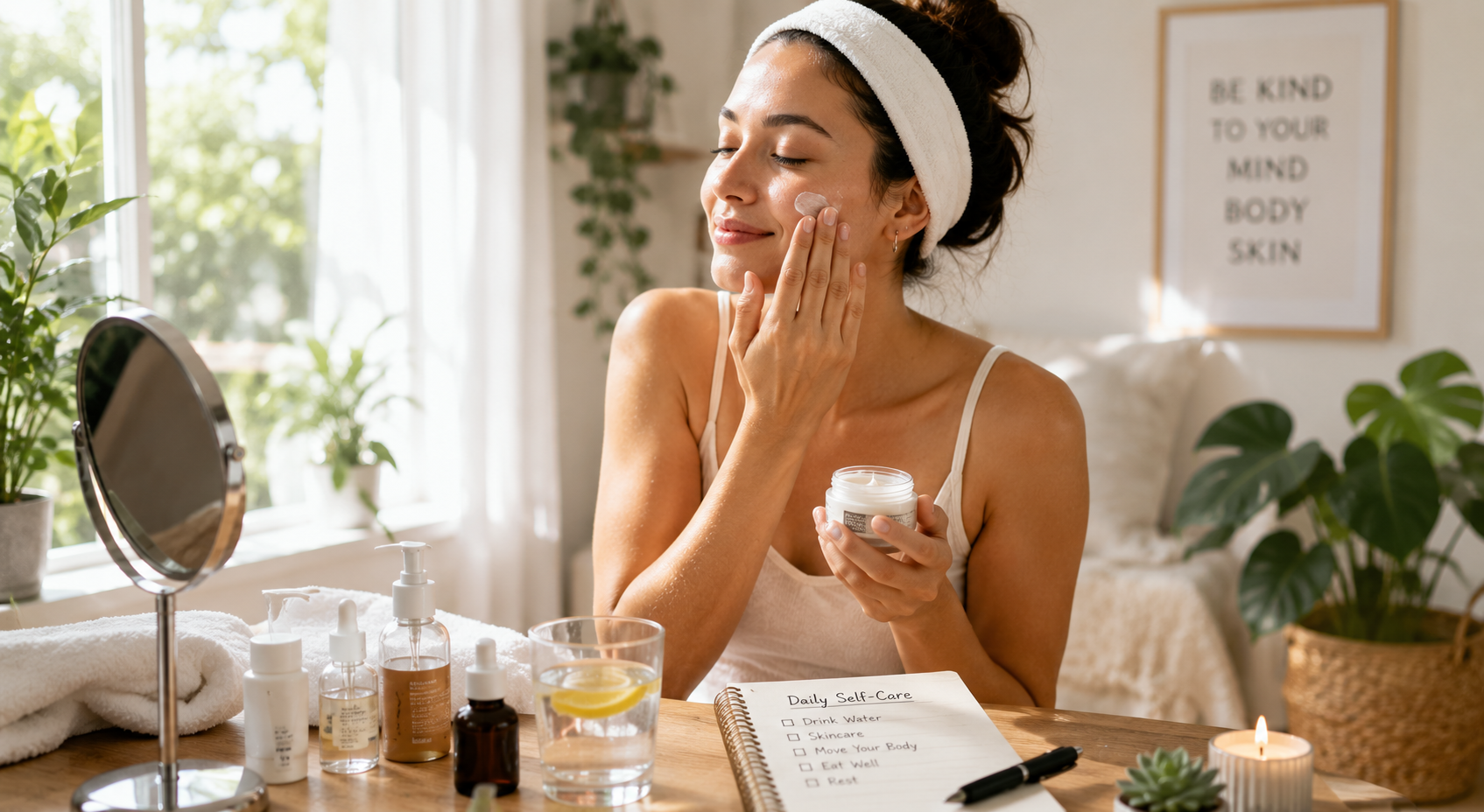
Healthy-looking skin does not require a crowded bathroom shelf or a complicated ten-step routine. In fact, simple healthy skin habits often provide a more practical foundation for everyday self-care. Gentle cleansing, sun protection, moisturizing, and thoughtful product choices can support the skin while reducing unnecessary irritation.
Skin is the body’s largest organ. It helps create a barrier between your body and the outside environment. However, everyone’s skin behaves differently. Age, climate, genetics, hormones, lifestyle, and product use can all influence how it looks and feels.
Therefore, there is no single routine that works perfectly for everyone.
The beauty industry constantly introduces new ingredients and trends. Some products can be useful, but more does not always mean better. Using too many active ingredients at once can make it difficult to identify what is helping or causing irritation.
A better approach starts with understanding your skin and building a manageable routine around its needs.
Start With a Simple Skin Care Routine
A basic routine can be surprisingly straightforward. For many people, cleansing, moisturizing, and daytime sun protection provide a useful starting point.
These healthy skin habits are easier to maintain when they fit naturally into your schedule.
Choose a gentle cleanser that removes dirt, excess oil, sunscreen, and other buildup without leaving your skin feeling excessively tight or uncomfortable. The right cleansing frequency can vary depending on skin type and activity.
After cleansing, moisturizer can help support the skin barrier and reduce water loss. Products range from lightweight lotions to richer creams.
During the day, sun protection becomes another key step.
Once your basic routine feels comfortable, you can decide whether specific concerns require additional products. Introducing one new product at a time can make reactions easier to identify.
Consistency usually provides more useful information than changing your entire routine every few days.
Cleanse Without Overdoing It
Cleansing removes substances that accumulate on the skin throughout the day. However, aggressive washing can also cause problems.
Hot water, harsh scrubbing, or overly strong cleansers may leave skin feeling dry or irritated.
One of the easiest healthy skin habits is treating cleansing as a gentle process rather than trying to make the skin feel completely stripped of oil.
Use lukewarm water instead of extremely hot water. Apply cleanser gently with your fingertips unless a healthcare professional has recommended another method.
Afterward, pat the skin rather than rubbing it aggressively with a towel.
People who wear makeup or water-resistant sunscreen may need additional cleansing to remove those products thoroughly. Still, more cleansing is not automatically better.
If your skin regularly feels tight, uncomfortable, or irritated after washing, your routine may need adjustment.
Moisturizer Supports the Skin Barrier
Skin naturally acts as a protective barrier. However, environmental conditions and personal care routines can influence how well that barrier functions.
Moisturizers can help reduce water loss and improve how dry skin feels.
That makes regular moisturizing one of the most practical healthy skin habits.
Different formulas suit different preferences. Lotions are often lighter, while creams and ointments can provide richer coverage.
Applying moisturizer after washing can be particularly helpful because the skin may still contain some surface moisture.
People with oily skin may assume they should avoid moisturizer completely. However, lightweight, non-comedogenic formulas may still be suitable for many oily or acne-prone skin types.
The best moisturizer is not necessarily the most expensive one. Instead, look for a product that feels comfortable enough to use consistently and does not repeatedly cause irritation.
Daily Sun Protection Matters
Ultraviolet radiation from sunlight can affect skin even when someone is not spending an entire day at the beach.
Repeated exposure contributes to visible skin aging and increases the risk of skin cancer.
For that reason, sun protection deserves a central place among healthy skin habits.
Broad-spectrum sunscreen helps protect against UVA and UVB radiation. In the United States, the American Academy of Dermatology recommends broad-spectrum, water-resistant sunscreen with SPF 30 or higher for exposed skin when outdoors.¹
Sunscreen works best as part of a broader strategy. Shade, clothing, hats, and sunglasses can provide additional protection.
Reapplication matters, particularly after swimming, sweating, or extended outdoor exposure. Follow the directions on your specific product.
Remember areas that are easy to overlook, including the ears, neck, and exposed scalp.
Sun protection is not simply a cosmetic anti-aging step. It is an important health measure.
Understand Your Skin Type
Product recommendations often refer to dry, oily, combination, sensitive, or acne-prone skin.
These descriptions can provide a useful starting point, although skin does not always fit perfectly into one category.
Understanding your current skin behavior can make healthy skin habits easier to personalize.
Dry skin may feel rough, tight, or flaky. Oily skin tends to produce more visible sebum, while combination skin can behave differently across facial areas.
Sensitive skin is more complicated because many factors can trigger irritation. A product labeled “for sensitive skin” does not guarantee that every person will tolerate it.
Your skin can also change. Weather, age, hormones, medication, and changes in routine may affect its needs.
Therefore, do not feel obligated to use the same products forever.
Pay attention to how your skin actually responds rather than relying entirely on a category printed on packaging.
Introduce New Products Gradually
Trying several new products at the same time can make skin care confusing.
If irritation develops, you may not know which product caused it. Likewise, if your skin improves, identifying the helpful step becomes difficult.
Gradual experimentation supports healthy skin habits because it gives you time to observe changes.
Consider introducing one product at a time. Depending on the ingredient and your goals, it may take time before meaningful results become visible.
Patch testing can also be useful for some products, particularly if your skin has reacted to cosmetics before.
Follow product instructions carefully. Using more than recommended does not necessarily improve results.
Active ingredients can be particularly irritating when combined without a clear reason.
If persistent redness, burning, swelling, pain, or another concerning reaction develops, stop using the suspected product and seek appropriate medical advice when needed.
Avoid Chasing Every Beauty Trend
Social media can make skin care trends spread incredibly quickly.
One week, a particular ingredient may appear essential. Soon afterward, another routine replaces it.
However, trends do not automatically belong in your healthy skin habits.
Creators may have different skin types, climates, budgets, and concerns from yours. Sponsored content can also influence recommendations.
Before buying a trending product, ask what problem you are trying to solve. Then determine whether the ingredient has credible evidence for that purpose.
Avoid assuming that tingling, burning, or peeling proves a product is working. Irritation is not a requirement for effective skin care.
A stable routine can seem less exciting than constantly testing new products. Yet stability makes it easier to understand what your skin tolerates.
Skin care should serve your needs rather than your social media feed.
Hydration Is More Than Drinking Extra Water
Hydration is frequently discussed in beauty content. However, claims about water and skin can become exaggerated.
Adequate fluid intake supports normal body functions. Still, drinking excessive amounts of water is not a guaranteed cure for every skin concern.
A balanced approach fits better with healthy skin habits.
Skin hydration also depends on its barrier and surrounding environment. Moisturizers can help reduce water loss from the skin’s surface.
Dry indoor air may contribute to discomfort for some people, especially during colder seasons or in heavily air-conditioned environments.
Nutrition, health conditions, medications, and skin disorders can also influence dryness.
Therefore, persistent dry skin should not automatically be treated by simply drinking more water.
Listen to normal thirst signals and follow appropriate health guidance for your circumstances.
Skin health is influenced by several factors rather than one simple hydration trick.
Sleep Supports Overall Well-Being
Sleep affects many aspects of physical and mental functioning. A poor night’s sleep can also influence how someone feels about their appearance the next morning.
Therefore, regular sleep belongs within broader self-care and healthy skin habits.
Adults generally benefit from consistent sleep schedules and an environment that supports rest. Individual needs can vary.
Simple habits may help. Keep your sleep and wake times reasonably consistent, limit disruptive light when preparing for bed, and create a comfortable sleeping environment.
Skin care itself should not make bedtime stressful.
If a complicated nighttime routine regularly delays sleep, simplifying it may be more useful than adding another product.
Persistent sleep problems deserve appropriate attention because sleep affects far more than appearance.
Self-care works best when cosmetic goals remain part of a broader approach to health rather than replacing it.
Nutrition and Skin Have a Complex Relationship
Food provides nutrients needed throughout the body, including the skin.
However, online beauty advice sometimes reduces this complicated relationship to lists of “perfect” and “bad” foods.
Balanced nutrition fits more naturally into healthy skin habits than extreme dietary rules.
A varied diet can provide protein, essential fats, vitamins, minerals, and other nutrients the body needs.
Certain skin conditions may have dietary relationships in some individuals. However, these relationships can be complicated and should not encourage unnecessarily restrictive eating.
Be cautious with supplements marketed as shortcuts to flawless skin. More of a nutrient is not always better, and some supplements can interact with medications or create health risks.
If you suspect food affects a persistent skin condition, a qualified healthcare professional can help you evaluate the concern appropriately.
Skin health should not require fear around eating.
Exercise Can Be Part of a Healthy Routine
Physical activity provides many established benefits for overall health. It can also support stress management and general well-being.
Exercise can therefore complement healthy skin habits, although sweating requires some practical skin care considerations.
If sweat, sunscreen, or makeup remains on your skin after a workout, cleansing or rinsing when practical may feel more comfortable.
Wear clean, breathable clothing appropriate for your activity.
Outdoor exercise also increases the importance of sun protection. Consider sunscreen, shade, protective clothing, and appropriate timing depending on conditions.
Avoid aggressively scrubbing your face simply because you have been sweating. Gentle cleansing is usually a more reasonable approach.
Exercise should primarily support health and enjoyment. Any appearance-related benefits are secondary.
Manage Stress Without Expecting Perfect Skin
Stress can influence behavior, sleep, and daily routines. Some people also notice changes in certain skin conditions during stressful periods.
Therefore, stress management can support broader healthy skin habits.
There is no single method that works for everyone. Exercise, hobbies, social connection, structured routines, relaxation techniques, or time outdoors may help different people.
However, skin changes should not become another reason to feel stressed about stress.
No lifestyle routine can guarantee perfectly clear skin.
Acne, eczema, psoriasis, rosacea, and other conditions can involve complex biological factors. They are not simply evidence that someone failed to relax enough.
If stress feels overwhelming or persistent, appropriate professional support can be valuable.
Self-care should reduce unnecessary pressure, not create another standard you feel required to achieve.
Keep Makeup Tools and Personal Items Clean
Products and tools that regularly touch your face can accumulate oils, product residue, and microorganisms.
Regular cleaning can therefore complement healthy skin habits.
Follow manufacturer instructions for makeup brushes, reusable applicators, and skin care devices.
Do not share products that directly contact the eyes or lips when doing so could increase hygiene concerns.
Replace products when they have expired or noticeably changed in smell, color, or texture.
Pillowcases, towels, and other fabrics that contact the face should also be washed regularly according to normal hygiene practices.
However, avoid becoming excessively fearful of ordinary microorganisms. Skin naturally hosts a complex community of microbes.
The goal is reasonable hygiene rather than attempting to create a sterile environment.
Read Product Labels Carefully
Skin care packaging can contain many claims: natural, clean, dermatologist tested, hypoallergenic, brightening, calming, or anti-aging.
These terms do not all have the same scientific or regulatory meaning.
Reading ingredient lists and directions can strengthen healthy skin habits by helping you understand what you are actually using.
Pay particular attention to active ingredients and instructions.
If you have known allergies, check labels before applying unfamiliar products.
Fragrance can be enjoyable for many users, although some people may experience irritation from fragranced products.
“Natural” does not automatically mean safer. Plants contain biologically active chemicals too, and natural ingredients can cause allergic reactions.
Likewise, synthetic ingredients are not automatically harmful.
Evaluate products according to their ingredients, evidence, formulation, and your own tolerance rather than marketing categories alone.
Be Careful With Exfoliation
Exfoliation removes cells from the outer surface of the skin through physical or chemical methods.
Some people enjoy the smoother appearance it can provide. However, excessive exfoliation may cause irritation.
Moderation is therefore important within healthy skin habits.
Physical exfoliation uses friction, while chemical exfoliants use ingredients that loosen or dissolve connections between surface cells.
Different products vary significantly in strength.
Combining several exfoliating acids, scrubs, retinoids, or other active products without understanding their effects can overwhelm the skin.
If your skin becomes persistently red, painful, tight, or unusually sensitive, reducing potentially irritating products may be appropriate.
People with certain skin conditions should seek professional advice before introducing strong exfoliating treatments.
More exfoliation does not automatically create healthier skin.
Protect the Skin Barrier
The outermost layers of skin help reduce water loss and protect the body from environmental exposure.
When this barrier becomes irritated, skin may feel dry, uncomfortable, sensitive, or rough.
Protecting it is central to healthy skin habits.
Gentle cleansing and regular moisturizing provide a strong foundation. Avoid repeatedly exposing the skin to products that cause burning or significant irritation.
Cold weather, dry air, frequent washing, and some active ingredients can affect how skin feels.
If irritation develops after adding several products, simplifying your routine can make it easier to identify the cause.
A basic cleanser, moisturizer, and appropriate daytime sun protection may provide a temporary reset for many people.
However, persistent symptoms can indicate a skin condition that needs professional assessment.
A strong routine should help your skin function comfortably rather than constantly challenge its tolerance.
Give Skin Care Time to Work
Beauty marketing often promises dramatic results within days.
Real skin changes may take longer.
Patience is one of the most underrated healthy skin habits because constantly changing products can make it difficult to evaluate them fairly.
Some moisturizers improve comfort quickly. However, products targeting concerns such as uneven tone, acne, or visible signs of aging may require consistent use over longer periods.
Follow evidence-based directions for the specific product.
Take photographs under similar lighting if you want to track gradual cosmetic changes. Daily mirror checking can make subtle improvement difficult to notice.
However, stop a product if it causes a concerning reaction rather than forcing yourself to continue for the sake of patience.
Consistency matters when a routine is comfortable and appropriate.
Know When Professional Advice Is Better
Self-care can address many everyday cosmetic concerns, but not every skin problem should be managed through online advice.
Persistent, painful, rapidly changing, bleeding, severely itchy, or otherwise concerning skin changes deserve professional attention.
Knowing when to seek help is part of responsible healthy skin habits.
A dermatologist or other qualified healthcare professional can diagnose conditions that may look similar to an untrained observer.
Professional guidance can also help people with persistent acne, eczema, rosacea, pigmentation concerns, or reactions to products.
In addition, changing moles or unusual skin lesions should not be ignored.
Online information can provide education, but it cannot examine your skin or account for your complete medical history.
Seeking professional care is not a failure of self-care. Sometimes it is the most appropriate form of it.
Build a Routine You Can Actually Maintain
The ideal routine on paper is useless if it is too expensive, complicated, or time-consuming to follow.
Sustainable healthy skin habits should fit your real life.
Start with the essentials. Choose products within your budget and avoid replacing them simply because something newer appears online.
Morning routines can remain simple. Night routines do not need numerous layers unless there is a specific reason for them.
Travel may require an even smaller routine.
Pay attention to how products interact. If your skin feels comfortable and your main concerns are being addressed, you may not need additional steps.
Consistency becomes easier when skin care feels like a normal part of hygiene rather than a major daily project.
Self-Care Should Not Mean Chasing Perfection
Skin has texture. Pores exist. Fine lines develop. Occasional blemishes happen.
Images in advertising and social media may use professional lighting, makeup, filters, editing, or carefully selected angles.
Therefore, realistic expectations should be included in healthy skin habits.
The purpose of skin care is not to make a human face look digitally filtered.
Instead, focus on comfort, protection, and concerns that genuinely matter to you.
Beauty can be enjoyable. Makeup, skin care, hairstyles, and personal style allow people to express themselves.
Problems arise when self-care becomes constant dissatisfaction.
A routine should support your well-being rather than convince you that every natural feature needs correction.
Healthy skin can still have visible texture, lines, scars, pigmentation, or occasional breakouts.
Conclusion
Building healthy skin habits does not require constantly buying new products or following every beauty trend. A simple, consistent approach can provide a strong foundation for everyday care.
Start with gentle cleansing, appropriate moisturizing, and reliable sun protection. Then, introduce additional products only when they address a specific concern.
Pay attention to your skin’s response rather than assuming irritation means a treatment is effective.
Lifestyle factors also matter. Sleep, balanced nutrition, exercise, stress management, and reasonable hygiene support overall well-being, although none guarantees flawless skin.
Most importantly, keep expectations realistic.
Skin naturally changes with age, environment, hormones, and life circumstances. Texture and occasional imperfections are normal.
When persistent or concerning problems appear, professional guidance is more useful than endlessly experimenting with online recommendations.
Effective self-care should be manageable, evidence-informed, and comfortable. The best routine is often not the longest one. It is the routine you can follow consistently while protecting your skin and supporting your overall well-being.
FAQ
1. What is the simplest daily skin care routine?
For many people, a basic routine includes gentle cleansing, moisturizing, and appropriate daytime sun protection. Additional products can target specific concerns.
2. Do expensive skin care products work better?
Not necessarily. Price alone does not determine effectiveness. Ingredients, formulation, evidence, individual tolerance, and consistent use matter more.
3. Should sunscreen be used only during summer?
Ultraviolet exposure can occur throughout the year. Your protection needs depend on factors such as location, weather, activity, and time spent outdoors.
4. How often should I try a new skin care product?
Introducing products one at a time makes it easier to identify benefits or irritation. Follow the specific product’s instructions and give appropriate products time to work.
5. When should I see a dermatologist?
Consider professional evaluation for persistent, painful, severe, rapidly changing, bleeding, or otherwise concerning skin problems, or when routine care is not helping.