
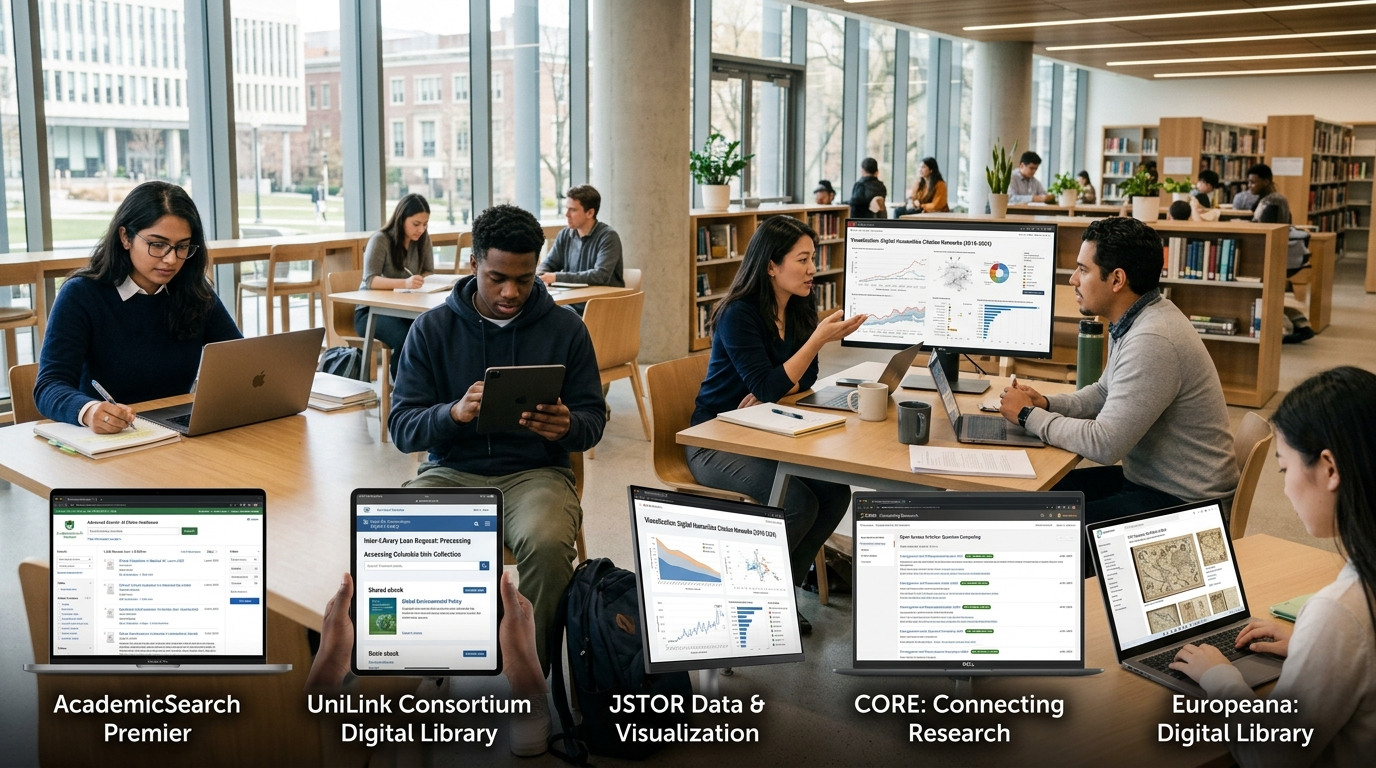
Research today is no longer limited to physical books or long hours in traditional libraries. Instead, online libraries speed research by giving instant access to thousands of credible sources with just a few clicks. This shift has transformed how students, professionals, and researchers gather information, making the process faster, more efficient, and far more accessible.
What makes this transformation so powerful is convenience. Rather than searching through shelves, users can now find journals, books, and articles instantly. Because of this, online libraries speed research while also improving accuracy and depth. As information continues to grow rapidly, these platforms have become essential tools for anyone who needs reliable data quickly.
Why Digital Libraries Are Changing Research
The rise of digital platforms has reshaped how people approach research. In the past, access to information depended on location. However, online libraries speed research by removing those barriers completely. Anyone with internet access can now explore vast collections of knowledge.
Additionally, these platforms offer advanced search tools. Users can filter results by topic, date, or relevance. As a result, they spend less time searching and more time analyzing information. This efficiency is one reason online libraries speed research so effectively.
Another advantage is organization. Many platforms allow users to save, tag, and categorize resources. Because of this, managing large amounts of data becomes much easier.
Moreover, digital libraries often include citation tools. These features simplify referencing, which is a critical part of research. Therefore, online libraries speed research not only in finding information but also in organizing and presenting it.
1. Google Scholar: Fast and Accessible Academic Search
Google Scholar is one of the most widely used platforms when it comes to online libraries speed research. It provides access to academic papers, theses, books, and conference proceedings from various disciplines.
One of its biggest strengths is simplicity. The interface is easy to use, allowing users to search quickly without needing advanced technical skills. Because of this, it is ideal for both beginners and experienced researchers.
In addition, Google Scholar ranks results based on relevance and citations. This feature helps users identify important studies more efficiently. As a result, online libraries speed research through smarter search algorithms.
Another useful feature is citation tracking. Users can see how often a paper has been cited, which indicates its influence. Therefore, Google Scholar remains a key tool for efficient research.
2. JSTOR: Reliable Academic Resources
JSTOR is another essential platform among online libraries speed research tools. It offers access to a wide range of academic journals, books, and primary sources.
Unlike general search engines, JSTOR focuses on curated content. This ensures that the information is credible and reliable. Because of this, researchers can trust the quality of the materials they find.
Additionally, JSTOR provides advanced filtering options. Users can narrow down results based on discipline, publication date, and type of resource. As a result, online libraries speed research by making searches more precise.
Another advantage is offline access. Users can download articles for later reading. This feature adds flexibility, especially for those working in different environments.
3. PubMed: A Hub for Scientific Research
PubMed is a leading platform for medical and scientific research. It is one of the most specialized online libraries speed research systems available today.
The platform includes millions of articles related to health, biology, and medicine. Because of this, it is widely used by healthcare professionals and researchers.
In addition, PubMed offers advanced search capabilities. Users can refine their queries using specific keywords and filters. This precision allows them to find relevant studies quickly.
Another key feature is its integration with other databases. This connectivity expands access to additional resources. As a result, online libraries speed research by providing comprehensive coverage of scientific topics.
4. Project Gutenberg: Free Access to Classic Literature
Project Gutenberg stands out among online libraries speed research tools for its focus on free content. It offers thousands of classic books that are available for download without cost.
This platform is particularly useful for humanities research. Students and researchers can access literary works, historical texts, and philosophical writings بسهولة. Because of this, it supports a wide range of academic studies.
In addition, the platform’s simplicity makes it easy to navigate. Users can search by author, title, or subject. As a result, online libraries speed research even for those new to digital tools.
Another advantage is accessibility. Since the content is free, it removes financial barriers. Therefore, Project Gutenberg plays an important role in democratizing knowledge.
5. ResearchGate: Collaboration and Knowledge Sharing
ResearchGate combines research access with networking, making it one of the most interactive online libraries speed research platforms. It allows researchers to share papers, ask questions, and collaborate with others.
One of its key strengths is community engagement. Users can connect with experts in their field, gaining insights and feedback. Because of this, it enhances the research process beyond simple data collection.
In addition, ResearchGate provides access to publications that may not be available elsewhere. Researchers often upload their own work, increasing accessibility.
Another benefit is real-time updates. Users can follow topics and receive notifications about new research. As a result, online libraries speed research by keeping users informed.
How These Platforms Improve Research Efficiency
The impact of digital libraries goes beyond convenience. Online libraries speed research by improving every stage of the process. From finding sources to organizing information, they streamline workflows significantly.
First, they reduce time spent searching. Advanced algorithms and filters help users locate relevant information quickly. As a result, research becomes more focused.
Second, they enhance accuracy. Access to credible sources ensures that information is reliable. Therefore, online libraries speed research while maintaining quality.
Third, they support collaboration. Many platforms allow users to share resources and ideas. This feature improves teamwork and knowledge exchange.
Finally, they encourage continuous learning. With constant updates, users can stay informed about new developments. Because of this, research becomes more dynamic and up to date.
Choosing the Right Online Library
Selecting the right platform depends on specific needs. While all online libraries speed research, each offers unique features suited to different purposes.
For general research, Google Scholar provides a broad range of sources. On the other hand, specialized platforms like PubMed are better for scientific studies. Because of this, understanding your focus is essential.
Ease of use is another important factor. A user-friendly interface can save time and reduce frustration. Therefore, choosing a platform that matches your skill level is beneficial.
In addition, consider accessibility. Some platforms require subscriptions, while others are free. As a result, online libraries speed research more effectively when they fit your budget.
Ultimately, the best choice is one that supports your workflow and enhances productivity.
Conclusion
Online libraries speed research in ways that were unimaginable just a few decades ago. They provide instant access to vast amounts of information, making research faster and more efficient. From academic databases to collaborative platforms, these tools have transformed how people gather and analyze data.
Each platform offers unique advantages, yet they all share a common goal. They simplify the research process and improve outcomes. Because of this, they have become essential for anyone working with information.
As technology continues to evolve, these tools will only become more advanced. However, their core value will remain the same. They help users work smarter, not harder.
In the end, choosing the right resources can make a significant difference. Online libraries speed research by providing the tools needed to succeed in today’s information-driven world.
FAQ
- What are the benefits of using digital libraries?
They provide quick access to reliable information, saving time and improving research efficiency. - Are online libraries free to use?
Some platforms are free, while others require subscriptions for full access. - Which platform is best for academic research?
Google Scholar and JSTOR are widely used for academic purposes. - Can these tools replace traditional libraries?
They complement traditional libraries but offer greater convenience and accessibility. - How can I improve my research process?
Using organized systems and reliable platforms can make research faster and more effective.