
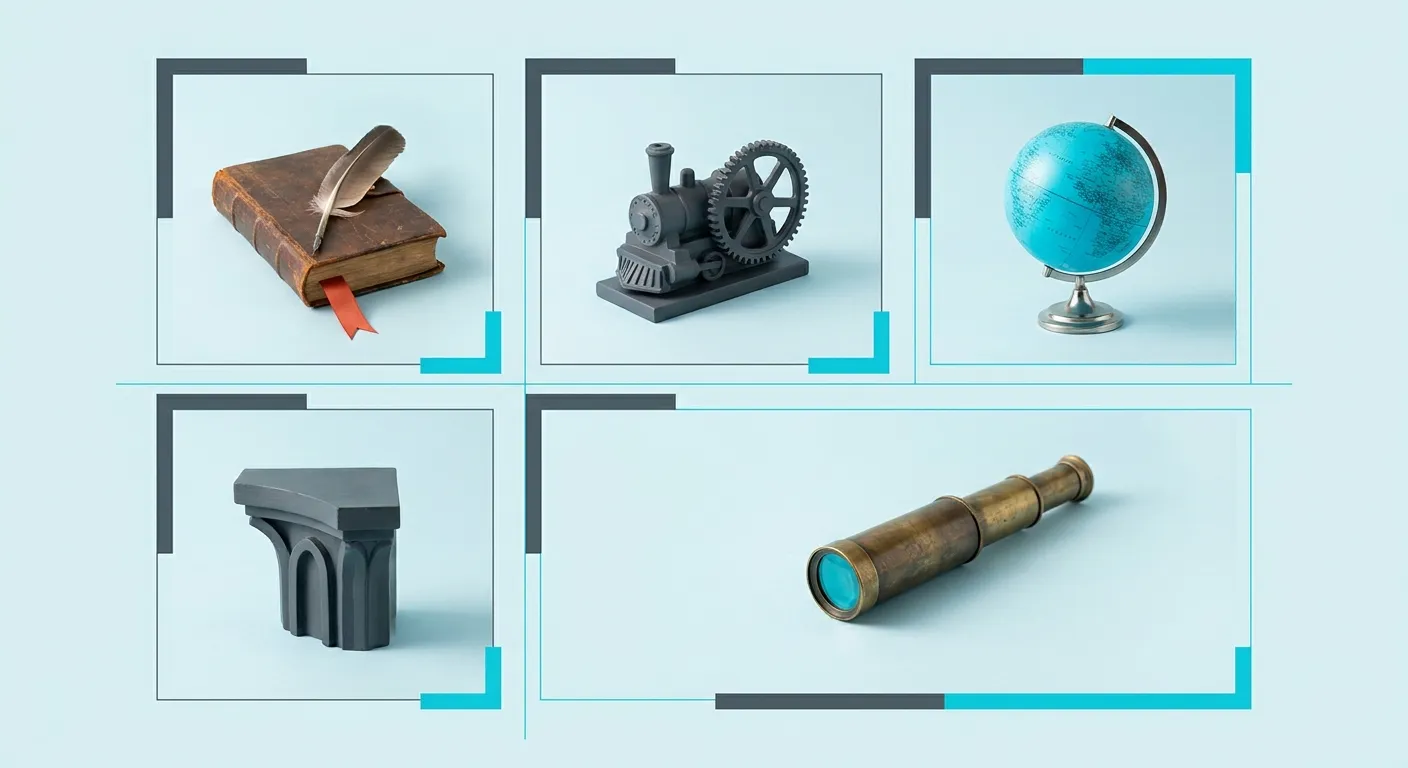
History is a tapestry woven with countless moments. However, some threads stand out, defining eras and reshaping the course of human civilization. These world-changing historical events ripple through time, influencing everything from political systems to technological advancements and cultural norms. Understanding their significance offers invaluable insights into how our present was formed and how our future might unfold. From profound scientific discoveries to transformative social movements, these pivotal moments continue to resonate, reminding us of humanity’s capacity for both destruction and progress.
1. The Fall of the Roman Empire: A New Era Begins
The collapse of the Western Roman Empire in 476 CE profoundly altered the European landscape. This event marked the end of an ancient superpower. Consequently, it ushered in the Middle Ages in Europe. This shift fundamentally altered political structures, trade routes, and societal organization. The centralized power of Rome dissolved. Instead, numerous smaller kingdoms emerged. This fragmentation led to centuries of localized governance and economic systems. Furthermore, the decline of Roman infrastructure impacted urban centers and long-distance commerce. Understanding this transition is crucial for grasping the origins of modern European nations and their distinct cultural identities.
The Roman Empire’s decline was not a sudden occurrence. Instead, it was a gradual process influenced by a combination of factors. Economic instability, internal political strife, and external pressures from barbarian invasions all played significant roles. For example, the vast expense of maintaining the empire’s borders strained its resources. Additionally, the division of the empire into Eastern and Western halves weakened its overall cohesion. The sack of Rome by the Visigoths in 410 CE was a symbolic blow. Ultimately, the deposition of Romulus Augustulus in 476 CE is widely considered the definitive end. This signaled a fundamental rearrangement of power in the Western world.
2. The Protestant Reformation: Reshaping Belief and Power
The Protestant Reformation, initiated in the 16th century, shattered religious unity in Europe. Martin Luther’s Ninety-five Theses in 1517 challenged the authority of the Catholic Church. This act ignited a movement that spread rapidly across the continent. As a result, it led to centuries of conflict but also fostered new ideas about individual liberty. It also challenged established authorities. The Reformation gave rise to various Protestant denominations. This religious diversification had profound political consequences. Monarchs often aligned with either Catholic or Protestant factions, leading to wars like the Thirty Years’ War. Therefore, the religious landscape of Europe was permanently altered.
This period also sparked significant intellectual and social changes. The emphasis on individual interpretation of scripture encouraged literacy. Moreover, it promoted the translation of the Bible into vernacular languages. This accessibility of religious texts empowered common people. It also reduced the clergy’s exclusive control over religious knowledge. The Reformation’s principles of individual conscience and direct access to God influenced later movements for political freedom. In fact, its impact extended far beyond theology, shaping education, art, and even economic practices. It represents one of the most significant world-changing historical events due to its widespread cultural and political ripple effects.
3. The Industrial Revolution: From Agrarian to Industrial Society
The Industrial Revolution, beginning in the late 18th century, transformed societies from agrarian to industrial. This period saw unprecedented technological advancements. For instance, the invention of the steam engine by James Watt revolutionized manufacturing and transportation. New economic systems emerged, centered on factories and mass production. Consequently, profound social changes occurred. Rapid urbanization was a hallmark of this era. People migrated from rural areas to cities seeking work in burgeoning industries. This influx led to the growth of large urban centers and new social classes.
The shift from manual labor to machine production increased efficiency dramatically. However, it also brought challenges. Poor working conditions, child labor, and vast economic inequalities became prevalent. Social reformers and labor movements arose in response. They advocated for better rights and improved living standards. The Industrial Revolution fundamentally reshaped global economies and geopolitical power. It laid the groundwork for modern capitalism and consumer culture. Furthermore, it continues to influence our technological advancements and environmental concerns today. Truly, it stands as one of the most impactful global transformations.
4. The Invention of the Printing Press: Democratizing Knowledge
The invention of the printing press by Johannes Gutenberg around 1440 revolutionized the dissemination of knowledge. Before this innovation, books were copied by hand, making them rare and expensive. Consequently, literacy was limited primarily to the elite and clergy. The printing press made it possible to produce books quickly and affordably. This accessibility fueled literacy rates across Europe. It also played a crucial role in the spread of new ideas, including those of the Protestant Reformation. Furthermore, it facilitated the growth of scientific inquiry and intellectual exchange.
The widespread availability of printed materials had a transformative effect on society. It standardized languages and promoted the development of national literatures. Universities benefited immensely from the easier access to texts. Scholars could share their research more broadly. Moreover, the printing press enabled the rapid spread of news and political pamphlets. This enhanced public discourse and contributed to political movements. Its impact on education, science, and the spread of information makes it a cornerstone among world-changing historical events. It fundamentally altered how humans learn, communicate, and preserve knowledge. For more details, consider exploring resources on the history of the printing press.
5. The Discovery of Penicillin: Revolutionizing Medicine
The discovery of penicillin by Alexander Fleming in 1928, though seemingly small at first, inaugurated the age of antibiotics. This groundbreaking discovery radically transformed medicine. Before penicillin, bacterial infections like pneumonia and sepsis were often fatal. Fleming observed that a mold, Penicillium notatum, inhibited bacterial growth. Later, Howard Florey and Ernst Chain developed methods to purify and mass-produce penicillin. This made it available for widespread medical use. As a result, countless lives were saved from infectious diseases.
The impact of penicillin on global health was immense. It drastically reduced mortality rates from previously incurable conditions. This led to significant increases in life expectancy worldwide. The success of penicillin spurred further research into antibiotics. Consequently, a new era of pharmaceutical development began. It fundamentally altered medical practices and public health strategies. The ability to combat bacterial infections changed the course of wars and everyday life. This scientific breakthrough represents one of the most vital world-changing historical events, shaping global demographics and human well-being for generations. You can learn more about Alexander Fleming and penicillin on the Nobel Prize website.
Understanding Humanity’s Trajectory Through Pivotal Moments
Many other pivotal moments have shaped human history. The Enlightenment, for instance, introduced revolutionary ideas about reason and individual rights. This period directly influenced democratic revolutions in America and France. Similarly, the development of agriculture thousands of years ago transformed nomadic hunter-gatherer societies into settled civilizations. This change led to the formation of villages, towns, and eventually, complex states. These foundational shifts illustrate humanity’s ongoing capacity for innovation and adaptation. They underscore how seemingly small advancements can lead to monumental societal changes.
Considering these profound shifts helps us appreciate the interconnectedness of historical forces. Political reforms often stem from philosophical movements. Scientific discoveries can trigger economic revolutions. Understanding these linkages provides a richer perspective on our current global landscape. It also highlights the enduring legacy of past generations. Each major turning point adds another layer to the complex narrative of human progress and struggle. Consequently, studying these moments helps us predict future trends and challenges.
The Enduring Legacy of Major Historical Shifts
The events discussed here are more than just isolated incidents. They are crucial turning points that have profoundly shaped the world we inhabit today. From the fall of empires to the rise of new ideas and technologies, these moments offer invaluable lessons. They remind us of the fragility of power and the resilience of the human spirit. Moreover, they demonstrate the continuous evolution of societies and cultures. The consequences of these past actions continue to unfold in our present. Therefore, an awareness of these major historical shifts is essential for informed citizenship and critical thinking.
Learning about these transformative episodes equips us with a deeper understanding of current global affairs. It helps us recognize patterns and avoid past mistakes. Furthermore, it inspires appreciation for the progress humanity has achieved. Each of these significant historical events contributed uniquely to the modern world. They collectively form the foundation upon which our contemporary societies are built. By examining these profound moments, we gain clarity on the forces that drive human civilization forward.
In summary, these world-changing historical events are more than just dates and names. They are crucial turning points that have profoundly shaped the world we inhabit today, offering lessons for generations to come. Recognizing their impact is fundamental to understanding our shared human story.
FAQ: Frequently Asked Questions About Major Historical Shifts
What defines a truly impactful historical event?
A truly impactful historical event is one that causes widespread, long-lasting changes across societies, cultures, economies, or political systems. Its effects are felt globally or across major regions for generations.
How did the printing press change the world?
The printing press democratized knowledge by making books affordable and accessible. This boosted literacy, spread new ideas rapidly, and fueled scientific and religious movements, fundamentally altering education and communication.
Why is the Industrial Revolution considered so significant?
The Industrial Revolution transformed economies from agrarian to industrial, leading to mass production, urbanization, and the rise of new social classes. It laid the foundation for modern technology and capitalism.
What was the impact of penicillin on society?
Penicillin revolutionized medicine by providing an effective treatment for bacterial infections. It drastically reduced mortality rates, increased life expectancy, and paved the way for modern antibiotics and pharmaceutical development.
How do past events influence our present day?
Past events influence our present by shaping political systems, cultural norms, technological advancements, and economic structures. Understanding these historical roots provides context for current global challenges and opportunities.
Explore more: More from Top 5s