
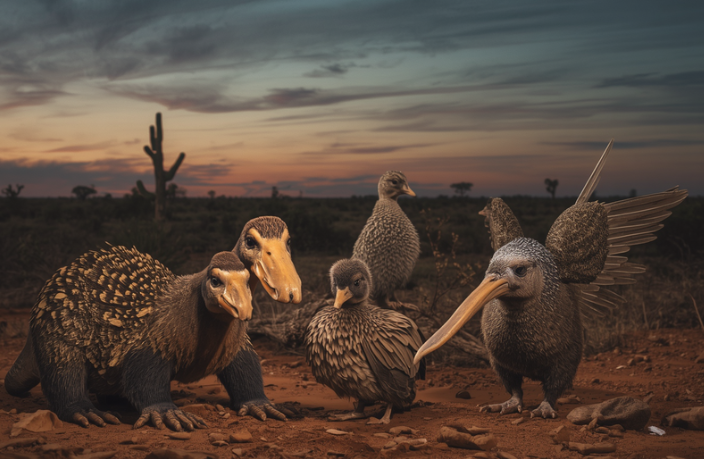
Weirdest animals on earth can make even the most imaginative fantasy creatures look ordinary. Some have transparent bodies, strange faces, unusual limbs, glowing features, or survival skills that seem impossible at first. Yet these animals are real, and each one exists because nature found a clever way to solve a survival problem. Their strange looks are not random mistakes. Instead, they often help with hunting, hiding, moving, mating, or staying alive in difficult environments.
The animal kingdom is full of creatures that challenge what people expect life to look like. A fish can look like a walking hand. A mammal can lay eggs and sense electricity. A deep-sea animal can appear almost alien. Meanwhile, a tiny amphibian can look so bright and soft that it seems unreal. These unusual species remind us that nature does not follow one design rule. It experiments, adapts, and surprises.
The weirdest animals on earth are fascinating because they show how much variety exists beyond familiar pets, farm animals, and zoo favorites. Many live in remote forests, deep oceans, rivers, caves, or hidden habitats. Because of that, they can feel mysterious even to people who love wildlife. Learning about them makes the natural world feel bigger, stranger, and far more creative.
Why Some Animals Look So Strange
Animals usually look strange to us because their bodies are built for lives we do not experience. A creature that lives in total darkness may not need normal eyes. An animal that hides from predators may evolve odd colors, shapes, or textures. Another species may develop a strange nose, mouth, or limb because it helps find food in a very specific way.
The weirdest animals on earth also prove that beauty is not the only goal of evolution. Survival matters more than looking normal. If a strange feature helps an animal live long enough to reproduce, that feature can remain in the species. Over many generations, small differences can become dramatic adaptations.
It is also important to remember that “weird” is a human reaction. These animals are not strange to themselves. They are perfectly suited to their worlds. Their bodies may look unusual to us, but each feature has a purpose shaped by habitat, diet, danger, and opportunity.
Axolotl
The axolotl is one of the most recognizable weirdest animals on earth because it looks like a smiling underwater cartoon. This unusual amphibian is native to lakes and canals around Mexico City, especially the Xochimilco area. Unlike most salamanders, the axolotl keeps many youthful features throughout its life. This condition is called neoteny, and it gives the animal its soft face, external feathery gills, and aquatic lifestyle.
Its gills are one of its most striking features. They fan out from the sides of the head like delicate branches, helping the axolotl breathe underwater. Its wide mouth creates the appearance of a permanent smile, which has made it popular online and in aquariums. However, behind that cute appearance is one of nature’s most remarkable survival abilities.
Axolotls are famous for regeneration. They can regrow lost limbs, parts of the tail, and even some damaged tissues. Scientists study them because this ability may offer clues about healing and tissue repair. For the axolotl, regeneration is a practical advantage in a world where injuries can happen easily.
Why the Axolotl Feels Almost Unreal
The axolotl feels unreal because it combines several rare qualities in one animal. It looks young forever, breathes with visible gills, lives underwater, and can regrow body parts. That combination makes it stand out even among unusual amphibians.
However, the axolotl’s future is fragile. Wild populations have declined because of habitat loss, pollution, invasive species, and urban development. Although many axolotls live in labs and aquariums, wild axolotls remain under serious threat. This contrast makes the animal both famous and vulnerable.
Among the weirdest animals on earth, the axolotl shows that strange features can also be deeply valuable. Its biology is not only adorable. It is scientifically important and worth protecting.
Platypus
The platypus is so unusual that early European scientists once thought it might be a hoax. This Australian mammal has a duck-like bill, webbed feet, a beaver-like tail, dense fur, and the ability to lay eggs. That mix of traits makes it one of the weirdest animals on earth and one of the most fascinating mammals ever discovered.
Most mammals give birth to live young, but the platypus belongs to a small group called monotremes. These mammals lay eggs, which makes them very different from dogs, cats, whales, humans, and most other familiar mammals. After the eggs hatch, the mother feeds her young with milk, although she does not have nipples. Instead, milk seeps through special skin areas.
The platypus also uses its bill in an amazing way. Although the bill looks soft and strange, it contains receptors that can detect tiny electrical signals from prey. This helps the platypus hunt underwater with its eyes, ears, and nostrils closed. It can find insects, worms, and small aquatic animals by sensing their movements.
What Makes the Platypus So Unique
The platypus feels like several animals blended into one, but each feature serves a purpose. Its webbed feet help it swim, while its tail stores fat and helps with movement. Its fur keeps it warm in water. Meanwhile, the bill acts like a sensitive hunting tool.
Male platypuses also have venomous spurs on their hind legs. This is rare among mammals and adds another surprising detail to an already unusual animal. The venom can cause serious pain, especially during breeding season when males may compete.
The platypus belongs on any list of the weirdest animals on earth because it breaks expectations. It is a mammal, but it does not behave like the mammals most people know. It reminds us that evolution can create combinations that seem impossible until we see them.
Blobfish
The blobfish became famous because of its droopy, soft-looking face. Photos of this deep-sea fish often make it look like a sad lump, which turned it into an internet icon. However, the familiar blobfish image is misleading. It usually shows the fish after it has been brought to the surface, where pressure changes distort its body.
In its natural deep-sea habitat, the blobfish looks more normal because it lives under intense pressure. It has a soft, gelatinous body that helps it survive far below the surface. Unlike many fish, it does not need a gas-filled swim bladder, which could be dangerous in deep water. Instead, its body is slightly less dense than water, helping it float with little effort.
The blobfish does not chase prey like a fast predator. It conserves energy and waits for edible material to drift nearby. In the deep sea, food can be scarce, so this low-energy lifestyle makes sense. What looks lazy or strange to humans is actually a smart adaptation.
Why the Blobfish Looks So Different
The blobfish looks strange because its body is built for pressure, not air. When it leaves the deep ocean, the lack of pressure changes its shape. This is why surface photos make it appear melted or saggy. In its true environment, it is better suited to the crushing conditions around it.
The blobfish also shows how unfair human judgment can be. People often call it ugly, but that label ignores its habitat. A body that looks odd at the surface may be perfect in the deep ocean. This makes the blobfish one of the weirdest animals on earth for a very practical reason.
Its fame may seem silly, yet it helps people notice deep-sea life. Many ocean animals remain unknown or poorly understood. The blobfish reminds us that strange creatures often live in places humans rarely see.
Aye-Aye
The aye-aye is a rare lemur from Madagascar with one of the strangest feeding methods in the animal kingdom. It has large eyes, big ears, rodent-like teeth, and an extremely long middle finger. This finger looks unusual, but it is one of the most useful tools any primate has. Because of these traits, the aye-aye is often listed among the weirdest animals on earth.
The aye-aye uses a method called tap foraging. It taps on tree bark with its long finger and listens for hollow spaces where insect larvae may hide. Then, it uses its sharp teeth to make a hole in the wood. Finally, it inserts the thin finger to pull out the prey. This feeding style is similar to what some woodpeckers do, but the aye-aye does it as a primate.
Its large ears help detect tiny sounds inside trees. Its eyes help it move at night, since it is nocturnal. Although its appearance may seem spooky to some people, every feature supports its lifestyle in the forests of Madagascar.
Why the Aye-Aye Is Misunderstood
The aye-aye has suffered from fear and superstition in some areas because of its unusual appearance. In certain local beliefs, it has been seen as a bad omen. This has made conservation harder, especially when combined with habitat loss.
However, the aye-aye is not dangerous to people. It is a specialized forest animal trying to survive in a shrinking habitat. Its strange body helps it find food in a way that few other animals can copy. That makes it not only weird, but also highly adapted.
Among the weirdest animals on earth, the aye-aye teaches an important lesson. Animals that look frightening or strange may still be harmless, intelligent, and ecologically valuable. Understanding them can replace fear with respect.
Red-Lipped Batfish
The red-lipped batfish looks like it belongs in a surreal painting. Found around the Galápagos Islands and nearby waters, this fish is famous for its bright red lips, flattened body, and awkward-looking movement. Instead of swimming gracefully like many fish, it often appears to “walk” along the seafloor using modified fins.
Its red lips are the feature most people notice first. Scientists are not completely sure why the lips are so bright, but they may play a role in species recognition or mating. Whatever the reason, they make the batfish unforgettable. Its face looks strangely expressive, almost like it has been painted.
The batfish also has a special structure on its head that can help attract prey. Like some anglerfish relatives, it can use a lure-like feature to draw small animals closer. This hunting style fits its slow-moving bottom-dwelling life.
Why the Batfish Looks Like It Walks
The red-lipped batfish uses its fins more like limbs than paddles. This helps it move across the ocean floor, where it searches for small fish, crustaceans, and other prey. Since it is not built for fast swimming, walking-like movement works better for its lifestyle.
Its odd body shape also helps it stay close to the seafloor. Rather than racing through open water, it blends movement with patience. This makes the animal a perfect example of how strange design can support a specific way of living.
The red-lipped batfish earns its place among the weirdest animals on earth because it looks both funny and fascinating. It proves that fish can be far more varied than the familiar shapes people usually imagine.
What These Animals Teach Us About Nature
These creatures may look strange, but they all make sense in context. The axolotl keeps youthful traits and regenerates body parts. The platypus combines egg-laying, milk production, venom, and electric sensing. The blobfish survives deep pressure with a soft body. The aye-aye uses a long finger to find hidden food. The red-lipped batfish walks along the seafloor with modified fins.
Together, they show that the weirdest animals on earth are not weird for no reason. Each one carries a survival story. Their bodies reflect pressure, darkness, diet, reproduction, movement, and habitat. Nature does not create these traits for entertainment, even though humans may find them funny or shocking.
They also remind us that many animals are misunderstood because of appearance. A blobfish is not truly a failed-looking fish. It is a deep-sea animal damaged by pressure change at the surface. An aye-aye is not a monster. It is a specialized primate. A batfish is not badly designed. It is built for life near the bottom.
Why Weird Animals Need Protection
Many unusual animals face serious threats. Habitat loss, pollution, climate change, invasive species, illegal trade, and human fear can all damage populations. Because weird animals are often rare or specialized, they may struggle when their environment changes. A creature that depends on one habitat or food source can become vulnerable quickly.
The axolotl is a clear example. It is famous worldwide, yet wild populations remain in danger. The aye-aye also depends on forest habitats that face pressure. Deep-sea animals may be affected by fishing, pollution, and future seabed disturbance. Even species that seem hidden from humans can suffer from human activity.
Protecting these animals matters because biodiversity keeps ecosystems healthier and more resilient. Every species plays a role, even when that role is not obvious. Some control insect populations. Others support food webs, soil systems, water habitats, or scientific discovery.
The weirdest animals on earth also have cultural and educational value. They spark curiosity. They encourage children and adults to ask questions. They help people care about wildlife beyond the usual cute or famous species. That curiosity can become support for conservation.
Conclusion
The weirdest animals on earth prove that nature is more creative than any fantasy story. The axolotl looks forever young and can regrow body parts. The platypus lays eggs, senses electricity, and carries venom. The blobfish survives deep pressure in a body that only looks strange at the surface. The aye-aye taps trees with a long finger to find hidden food. The red-lipped batfish walks across the seafloor with a face no one forgets.
Each animal may seem unbelievable at first, but every strange feature has a purpose. Nature builds for survival, not for human expectations. A funny face, odd limb, soft body, or bright color can become the perfect tool in the right environment.
These species also remind us to look beyond first impressions. Strange does not mean useless. Weird does not mean wrong. In fact, unusual animals often reveal some of the smartest solutions in biology. They show how life adapts to pressure, darkness, danger, scarcity, and change.
In the end, the weirdest animals on earth make the planet feel more mysterious and alive. They challenge what we think animals should look like, and they invite us to keep learning. The more we understand them, the more we see that nature’s strangest designs are often among its most brilliant.
FAQ
- What Is the Strangest Animal in the World?
The axolotl, platypus, blobfish, aye-aye, and red-lipped batfish are all strong contenders. The strangest choice depends on whether you focus on appearance, behavior, or survival abilities.
- Why Do Some Animals Look So Weird?
Animals often look weird because their bodies are adapted to specific habitats or survival needs. Strange features may help them hunt, hide, move, breathe, reproduce, or avoid predators.
- Is the Blobfish Really That Ugly Underwater?
No, the blobfish looks very different in its natural deep-sea habitat. The famous droopy appearance usually happens after pressure changes when it is brought to the surface.
- Can Axolotls Really Regrow Body Parts?
Yes, axolotls can regenerate lost limbs and some damaged tissues. Scientists study them because their healing ability may help researchers understand tissue repair better.
- Are Aye-Ayes Dangerous to Humans?
No, aye-ayes are not dangerous to humans. They are nocturnal lemurs that use a long finger to find insects inside trees. Their unusual look has caused fear, but they are important forest animals.