
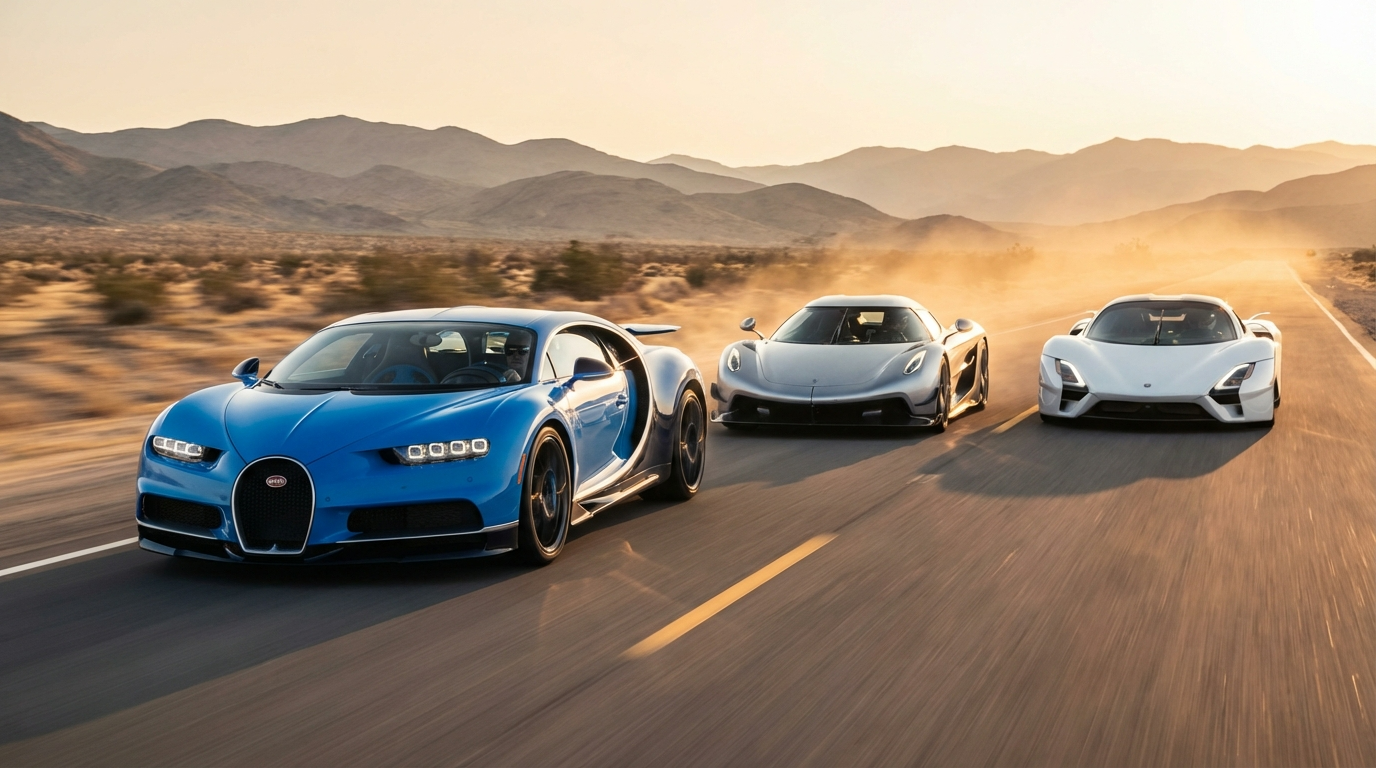
Speed has always fascinated car enthusiasts. From early racing machines to modern hypercars, engineers constantly push limits. The Fastest Cars World rankings highlight vehicles built with one goal in mind: maximum velocity.
However, top speed is not just about horsepower. Aerodynamics, weight distribution, and advanced materials all influence performance. As a result, only a few elite models earn a place among the true speed kings.
In this guide, we explore five record-breaking machines that dominate the Fastest Cars World conversation. Each car combines engineering precision with raw power, proving that innovation continues to redefine what is possible.
What Determines a Car’s Top Speed
Reaching extreme speeds requires more than a powerful engine. First, aerodynamics play a critical role. Smooth airflow reduces drag and enhances stability.
Second, weight management matters. Lightweight carbon fiber components improve acceleration and control. Additionally, advanced tire technology ensures grip at high velocity.
Third, engine output must balance reliability and efficiency. Because excessive power can strain components, engineers fine-tune performance carefully.
Finally, testing conditions influence results. Controlled environments and specialized tracks help verify claims. Therefore, rankings within the Fastest Cars World category rely on documented speed runs.
With these factors in mind, let’s examine the five fastest production cars ever made.
1. Bugatti Chiron Super Sport 300+
The Bugatti Chiron Super Sport 300+ made headlines by surpassing 300 mph. It achieved a verified speed of 304 mph under controlled conditions.
Engineering Mastery
Powered by an 8.0-liter quad-turbocharged W16 engine, the Chiron produces immense horsepower. Consequently, acceleration feels relentless.
Engineers extended the body for improved aerodynamics. Therefore, airflow remains stable even at extreme speeds.
Record-Breaking Achievement
Although production models limit speed electronically, the record-setting version demonstrated what modern engineering can achieve.
Among all entries in the Fastest Cars World ranking, this Bugatti remains iconic.
2. SSC Tuatara
The SSC Tuatara claimed an official top speed exceeding 295 mph during verified runs.
Lightweight Design
Constructed with a carbon fiber chassis, the Tuatara minimizes weight. As a result, acceleration improves significantly.
Its twin-turbo V8 engine generates extraordinary power. Moreover, aerodynamic refinement enhances stability.
Precision Testing
Engineers conducted multiple speed runs to ensure credibility. Because accuracy matters, documentation supports its ranking in the Fastest Cars World elite group.
3. Koenigsegg Jesko Absolut
Koenigsegg designed the Jesko Absolut specifically for maximum speed potential.
Advanced Aerodynamics
The car eliminates large rear wings to reduce drag. Consequently, it focuses on straight-line velocity.
Its twin-turbocharged V8 engine delivers staggering output. Additionally, advanced transmission systems optimize power delivery.
Theoretical Limits
Although full-speed runs remain ongoing, simulations suggest extraordinary potential. Therefore, experts place it high among contenders in the Fastest Cars World discussion.
4. Hennessey Venom F5
The Hennessey Venom F5 aims to break the 300 mph barrier with American engineering.
Extreme Power
A 6.6-liter twin-turbo V8 engine powers the Venom F5. As a result, horsepower numbers exceed most competitors.
Lightweight construction improves agility. Moreover, aerodynamic testing refines high-speed performance.
Ambitious Goals
While official record attempts continue, the Venom F5 stands among top challengers in the Fastest Cars World rankings.
5. Rimac Nevera
The Rimac Nevera represents electric innovation in the hypercar segment.
Electric Performance
Unlike traditional combustion engines, the Nevera relies on four electric motors. Consequently, torque delivery feels instantaneous.
Its battery system supports impressive acceleration. Additionally, advanced cooling systems maintain efficiency.
Speed and Sustainability
Although electric, it competes with gasoline-powered rivals. Therefore, it earns a place among the Fastest Cars World speed leaders.
How Aerodynamics Shape Speed
At extreme velocity, air becomes the biggest obstacle. Therefore, engineers design sleek bodies to reduce resistance.
Wind tunnel testing identifies pressure points. Additionally, active aerodynamics adjust surfaces during driving.
Because even small design changes impact speed, precision remains essential.
The Role of Tires and Brakes
Tires must withstand intense heat and pressure. Specialized compounds prevent blowouts at high speeds.
Meanwhile, braking systems require carbon-ceramic materials for durability. Without proper stopping power, extreme velocity becomes dangerous.
Safety remains central in the Fastest Cars World engineering process.
Why Production Cars Matter
Concept vehicles often claim high speeds. However, production models carry more credibility.
These cars meet legal and manufacturing standards. Therefore, their achievements reflect real-world capability.
Only a limited number of buyers can afford such machines. Nevertheless, they represent technological milestones.
Electric vs. Combustion Engines
Electric hypercars deliver instant torque. Meanwhile, combustion engines offer traditional power delivery.
Both technologies compete fiercely. Because innovation accelerates in both areas, future rankings may shift dramatically.
The Fastest Cars World category now includes both fuel-powered and electric machines.
The Cost of Speed
Extreme performance comes with high price tags. Most hypercars cost millions of dollars.
Additionally, maintenance and insurance add to ownership expenses. However, collectors value exclusivity and engineering brilliance.
For many enthusiasts, these vehicles symbolize more than transportation.
Future of High-Speed Engineering
Manufacturers continue exploring new materials and propulsion systems.
Hydrogen technology and improved battery efficiency may influence future models. Consequently, speed records will likely evolve.
While current champions dominate headlines, innovation ensures constant competition within the Fastest Cars World landscape.
Conclusion: Engineering at Full Throttle
The Fastest Cars World rankings showcase humanity’s pursuit of speed. From Bugatti’s record-breaking run to Rimac’s electric innovation, each model pushes boundaries.
These machines combine advanced materials, aerodynamic precision, and extraordinary power. Moreover, they inspire future generations of engineers.
Although speed records may change, the quest for performance remains constant.
Ultimately, the Fastest Cars World elite prove that when ambition meets engineering, limits become starting points for new achievements.
FAQ
1. Which car currently holds the highest verified top speed?
The Bugatti Chiron Super Sport 300+ holds a verified speed record above 300 mph.
2. Are electric hypercars as fast as gasoline models?
Yes. Electric models like the Rimac Nevera deliver impressive acceleration and competitive top speeds.
3. Why are aerodynamic designs so important for speed?
Aerodynamics reduce drag and improve stability at high velocity.
4. How much do the fastest hypercars cost?
Most models cost several million dollars due to limited production and advanced engineering.
5. Will future cars exceed 300 mph regularly?
Advances in technology suggest higher speeds are possible, though safety and practicality remain key considerations.