
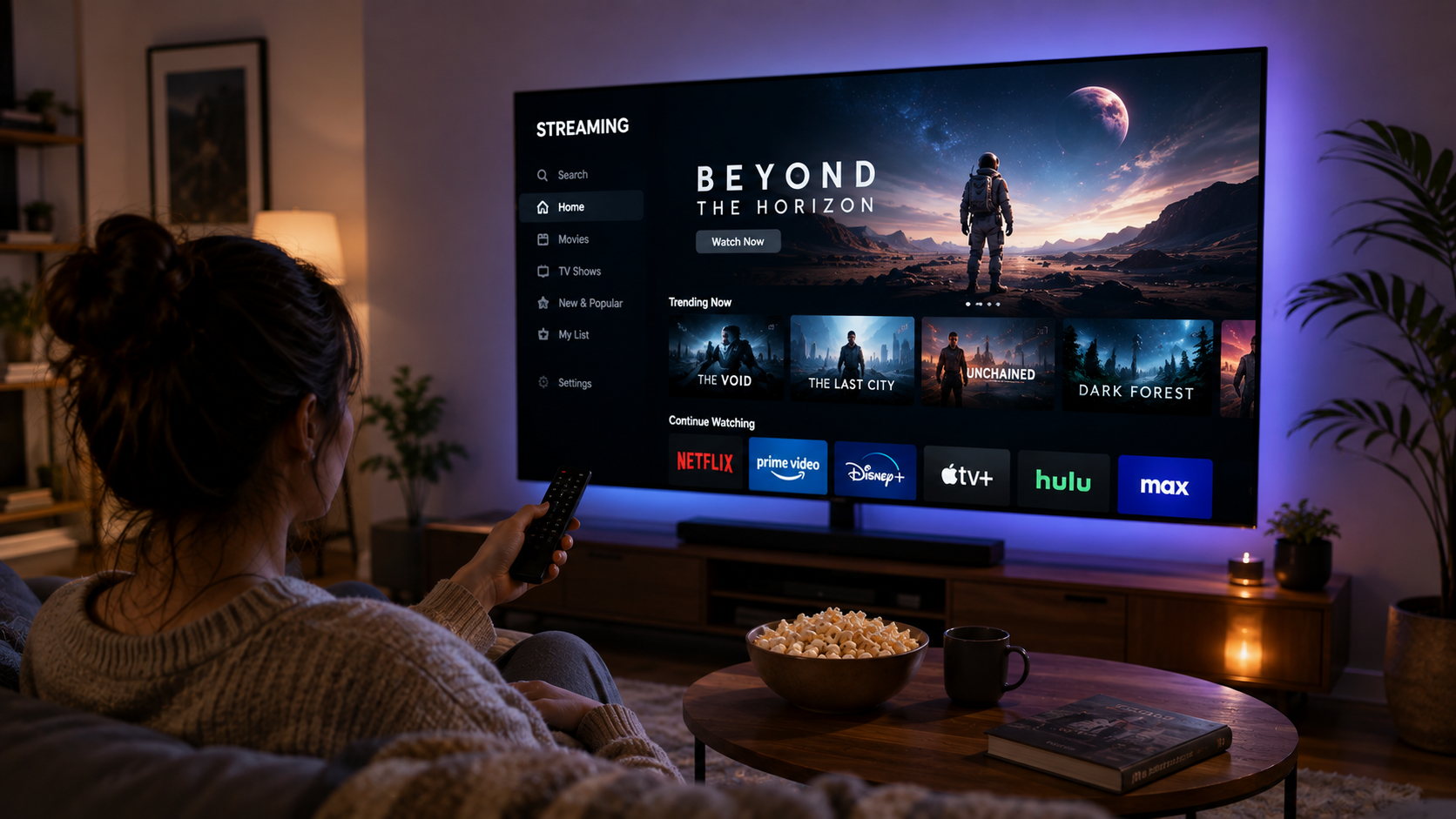
The entertainment industry has transformed rapidly as audiences move beyond traditional television schedules. Today, the streaming services future affects how movies and TV shows reach viewers, how studios fund productions, and even how stories are structured. People can watch entertainment almost anywhere, while creators have more distribution options than previous generations had.
Streaming originally offered a convenient alternative to cable television and physical media. However, it has grown into a major part of the entertainment business. Large media companies now operate their own platforms, while specialized services focus on particular genres or audiences.
This growth has also created new challenges. Viewers face more subscriptions, fragmented content libraries, changing prices, and advertising options. Meanwhile, studios must balance theatrical releases, traditional television, and online distribution.
Streaming is not simply replacing older entertainment. Instead, it is creating a more complicated ecosystem where different viewing models increasingly overlap.
On-Demand Viewing Changed Audience Expectations
Traditional television required viewers to organize their schedules around programming. If a show aired at 8 p.m., audiences generally needed to watch at that time or record it.
Streaming reversed that relationship.
The streaming services future is built largely around viewer control. Audiences expect to choose what they watch and when they watch it. They can pause a movie, continue on another device, or watch several episodes consecutively.
This convenience has influenced traditional broadcasters as well. Many networks now provide on-demand libraries alongside scheduled programming.
However, unlimited choice can create another problem. Viewers sometimes spend significant time browsing before selecting something.
Platforms therefore invest heavily in recommendation systems and interface design. Their goal is to help viewers discover suitable content quickly.
Ultimately, on-demand viewing has made flexibility a standard expectation. Entertainment companies now need to provide convenience while helping audiences navigate increasingly large libraries.
Binge-Watching Changed Television Storytelling
Streaming helped popularize the release of entire television seasons at once. Consequently, viewers could watch several episodes without waiting a week between installments.
This behavior affected storytelling.
One important element of the streaming services future involves deciding how and when episodes should be released. Some platforms still launch full seasons simultaneously. Others have returned to weekly schedules or use hybrid approaches.
A full-season release can encourage immersion. Writers may create storylines that flow continuously from one episode to another.
Weekly releases offer different advantages. They can extend conversations around a show for several weeks. Viewers also have time to discuss theories and individual episodes.
Neither approach works perfectly for every program.
Therefore, streaming has given studios more flexibility in how stories reach audiences. Release strategy has become part of the creative and marketing process rather than simply a scheduling decision.
Movies Have More Distribution Paths
For decades, major movies followed relatively predictable release patterns. Films appeared in theaters first. Afterward, they moved to home video, premium television, and other channels.
Streaming disrupted that sequence.
The streaming services future gives studios several potential distribution strategies. A movie may receive a traditional theatrical release, arrive directly on a platform, or move online after a shorter theatrical window.
Different films benefit from different approaches. Large action movies may generate significant revenue and cultural attention in theaters. Meanwhile, smaller productions may reach larger audiences through streaming.
Studios must therefore consider each project’s audience, budget, marketing strategy, and commercial potential.
Theatrical viewing also provides an experience streaming cannot fully reproduce. Large screens, powerful sound systems, and shared audiences remain appealing.
As a result, cinemas and streaming platforms may continue to coexist. Instead of one replacing the other completely, studios can use each distribution channel for different purposes.
Original Content Became a Competitive Advantage
Streaming platforms initially relied heavily on licensed movies and television shows. However, competition made exclusive programming increasingly important.
Original productions can attract new subscribers and encourage existing users to stay.
Therefore, original content plays a major role in the streaming services future. Platforms invest in dramas, comedies, documentaries, reality programs, children’s entertainment, and films that audiences cannot find elsewhere.
Exclusive programming also helps establish a platform’s identity. One service may become known for prestigious dramas, while another develops a strong reputation for documentaries or family entertainment.
However, producing original content is expensive. Not every series attracts enough viewers to justify continued investment.
Platforms therefore analyze audience behavior closely. They may cancel shows, adjust budgets, or change release strategies based on performance.
This creates tension between creative ambition and commercial sustainability. Streaming provides opportunities for original storytelling, but successful production still requires careful financial decisions.
Global Audiences Are Discovering More Stories
Traditional distribution often limited entertainment according to geography. International films and television programs could take months or years to reach other markets.
Streaming can reduce those barriers.
The global reach of the streaming services future allows audiences to discover stories from countries they may know little about. Subtitles and dubbing make international productions accessible to more viewers.
A successful series can therefore gain fans far beyond its home market.
This international exposure can influence creative industries. Producers may recognize demand for stories that were once considered too regional for global distribution.
However, global reach should not require every production to feel culturally generic. Local details can make stories distinctive and interesting.
Streaming platforms also need effective translation and localization. Poor subtitles or dubbing can weaken the viewing experience.
When handled carefully, international distribution expands audience choice while giving filmmakers and television creators access to markets that were previously difficult to reach.
Recommendation Algorithms Shape Discovery
A streaming library can contain thousands of titles. Without organization, finding something interesting would become difficult.
Recommendation systems attempt to solve this problem.
As the streaming services future develops, algorithms increasingly influence which movies and programs viewers notice first. Platforms can analyze viewing history and other interactions to personalize suggestions.
This approach offers obvious benefits. Someone who enjoys documentaries may quickly discover related titles. Likewise, viewers can find older content they might never search for directly.
However, personalization can narrow discovery. If recommendations continually reflect past behavior, audiences may encounter fewer unfamiliar genres.
Human curation can help balance this effect. Editorial collections, featured lists, and themed recommendations can introduce viewers to different material.
Ultimately, discovery matters almost as much as library size. A platform containing excellent content provides limited value when viewers cannot easily find programs they enjoy.
Advertising Is Returning to Streaming
Streaming initially attracted many viewers partly because it offered entertainment without traditional television commercials. That distinction is becoming less clear.
Many platforms now provide advertising-supported options.
Advertising has therefore become an important part of the streaming services future. Lower-priced plans can make services accessible to viewers who do not want to pay for premium subscriptions.
Platforms may also use advertising to create additional revenue without relying entirely on subscription fees.
However, the viewer experience matters. Excessive or repetitive advertisements can reduce satisfaction. Platforms must find a balance between commercial needs and convenience.
Advertisers also value streaming because digital platforms can potentially provide more targeted campaigns than traditional television.
Privacy remains important, though. Viewers should receive appropriate information about how their data supports advertising where required.
Streaming may therefore begin resembling television in some ways, but technology allows platforms to approach advertising differently.
Subscription Fatigue Is Changing Consumer Behavior
When only a few major streaming services existed, subscribing to several could still feel affordable compared with large cable packages.
Today, the market is more fragmented.
Subscription fatigue has become a challenge for the streaming services future because viewers may need multiple services to access all the entertainment they want.
Consumers increasingly rotate subscriptions. Someone might subscribe to one platform for a specific show, cancel afterward, and join another service.
Price increases can encourage this behavior further.
Platforms therefore need more than one popular series. They must provide enough ongoing value to remain part of a household’s monthly budget.
Bundles may become more common as a response. Several services can be packaged together at a combined price.
Ironically, this could make streaming resemble traditional television bundles. However, consumers may still retain greater flexibility to cancel or change services.
Affordability will remain a major factor shaping which platforms succeed.
Live Entertainment Is Expanding Online
Streaming began largely with prerecorded movies and television programs. However, live content is becoming increasingly important.
Sports, concerts, award shows, news, and special events can attract large audiences at specific times.
Live programming could significantly influence the streaming services future because it gives subscribers reasons to open a platform regularly.
Sports are especially valuable. Fans often want to watch games as they happen rather than several days later.
However, live streaming creates technical challenges. Platforms must serve large numbers of viewers simultaneously while minimizing delays and interruptions.
Broadcast rights can also be expensive. Furthermore, sports availability often varies by region.
Still, live programming expands the role of streaming. A platform can become more than an on-demand library when it combines scheduled events with movies and television series.
The distinction between traditional broadcasting and online streaming may therefore continue to shrink.
Smart TVs Made Streaming Easier
Early streaming often required watching on a computer or connecting additional hardware to a television.
Modern smart TVs have simplified the process.
Built-in applications support the streaming services future by making online entertainment accessible directly from the television interface. Viewers can move between platforms without needing separate devices in many cases.
Streaming sticks, gaming consoles, tablets, and smartphones provide additional options.
This device flexibility has changed viewing behavior. Someone might begin a program on a television and continue watching on a phone while traveling.
However, interfaces vary considerably. Some televisions become slow as they age, while certain applications may stop receiving updates on older hardware.
Consumers should therefore consider software support when buying connected devices.
Easy access has been essential to streaming growth. The technology works best when audiences can focus on entertainment rather than troubleshooting complicated equipment.
Data Is Influencing Entertainment Decisions
Traditional television ratings provided studios with estimates of audience size. Streaming platforms can collect much more detailed information about viewing behavior.
They may know whether viewers finish an episode, abandon a series, or return for another season.
Consequently, data has become important to the streaming services future.
These insights can help companies understand audience preferences. They can also influence decisions about renewals, marketing, recommendations, and future productions.
However, creative decisions cannot rely entirely on statistics. Historical viewing data may encourage studios to repeat familiar formulas rather than take risks.
Some culturally influential movies or shows may also begin with modest audiences before gaining recognition over time.
Therefore, data should support human judgment rather than replace it.
Privacy matters as well. Companies should handle viewer information responsibly and follow relevant data protection requirements.
The challenge is using audience insights without reducing creativity to numbers alone.
Streaming Creates Opportunities for Niche Content
Traditional television networks needed programs capable of attracting relatively large audiences. Streaming platforms can serve smaller communities more efficiently.
This creates opportunities for specialized entertainment.
Niche programming could remain an important strength of the streaming services future. Documentary enthusiasts, horror fans, anime viewers, classic movie lovers, and other audiences can find services designed around specific interests.
Smaller platforms do not necessarily need the same number of subscribers as global entertainment companies. Instead, they can focus on serving a dedicated audience particularly well.
Creators benefit too. Projects that might struggle to receive broad theatrical distribution can potentially find viewers online.
However, niche platforms still need sustainable business models. Licensing, production, technology, and marketing all require funding.
The strongest specialized services provide something larger platforms cannot easily replicate, such as deep expertise, carefully curated libraries, or strong communities.
Password-Sharing Rules Are Reshaping Accounts
For years, many households treated streaming passwords casually. Accounts could spread between relatives, friends, and different homes.
Platforms have increasingly reconsidered that approach.
Account management has become another part of the streaming services future as companies seek to convert more viewers into paying customers.
Services may define households, limit simultaneous streams, offer additional member options, or require verification.
These policies can create frustration, especially for families who legitimately live in different places.
At the same time, platforms need revenue to fund content and operations.
Clear communication becomes important. Consumers should understand how many devices, users, or locations their plan supports before subscribing.
Account policies will likely continue evolving as companies experiment with pricing structures.
For viewers, comparing plans now requires looking beyond the monthly price. Household rules and simultaneous viewing limits can significantly affect value.
Streaming Is Changing How Actors and Creators Work
Streaming affects more than audiences. Actors, writers, directors, producers, editors, and other professionals also work within a changing business model.
Productions created for online platforms may use different episode counts, budgets, schedules, and compensation structures from traditional television.
The streaming services future therefore includes ongoing discussions about how creative workers should be compensated.
Residual payments and transparency around viewing performance have become important industry issues. Creative professionals need agreements that reflect new distribution models.
Streaming has also created more production opportunities in some regions. International investment can support local crews, studios, and performers.
However, rapid production growth can create pressure on workers and infrastructure.
A healthy entertainment ecosystem depends on more than subscriber numbers. It also requires sustainable conditions for the people who create movies and television.
As business models evolve, labor agreements will likely continue adapting as well.
Cinemas Still Offer Something Streaming Cannot
The convenience of watching movies at home is undeniable. Nevertheless, cinemas continue to provide a distinctive experience.
A theater offers a large screen, powerful sound, darkness, and fewer everyday distractions. Watching with an audience can also make comedy, horror, and major action sequences feel different.
Therefore, the streaming services future does not necessarily require the disappearance of theaters.
Instead, theatrical releases may become more focused on films that benefit strongly from the big-screen experience.
Independent cinemas can also differentiate themselves through festivals, special screenings, classic films, and community events.
Meanwhile, streaming provides convenience for people who cannot easily visit theaters.
The two formats serve different needs. Some viewers value immediate home access, while others enjoy making a movie into an event.
Studios can potentially benefit from both by choosing release strategies that fit individual films.
Content Libraries May Keep Changing
One common misconception is that movies and shows available on a streaming service will remain there permanently.
Licensing agreements make that unlikely.
Changing libraries are an important consideration in the streaming services future. A title may disappear when a licensing agreement expires or move to another platform.
Media companies also own different rights in different countries. Therefore, the same service may offer different catalogs depending on location.
Original productions can create complications too. Distribution agreements may involve multiple companies.
For consumers, this fragmentation makes finding particular movies more difficult. Search tools that compare streaming availability can help.
Physical media and digital purchases may still appeal to people who want more consistent access to favorite titles.
Streaming offers enormous convenience, but subscribers generally pay for access to a changing library rather than permanent ownership.
Understanding that distinction helps viewers set realistic expectations.
Interactive Entertainment Could Expand
Streaming does not need to remain completely passive. Some platforms have experimented with programs that allow viewers to make choices.
Interactive storytelling can create branching narratives where decisions influence what happens next.
This format represents an experimental side of the streaming services future. It combines elements of television with ideas commonly associated with video games.
However, interactive productions can be complicated to create. Writers need to plan multiple possibilities, while production teams may need to film additional scenes.
Not every story benefits from viewer control either. Sometimes audiences simply want to experience a carefully constructed narrative.
Still, streaming platforms have technical capabilities that traditional broadcast television did not offer easily.
Future entertainment may experiment further with participation, live voting, companion applications, or other interactive features.
The most successful ideas will likely be those where interaction improves the story rather than functioning as a novelty.
Personalization Will Become More Sophisticated
Current streaming platforms already personalize recommendations and home screens. Future systems could become even more responsive.
They may consider viewing context, preferred genres, household profiles, and other signals to organize content.
Personalization will likely remain central to the streaming services future because large libraries require effective discovery.
However, platforms need to avoid making viewers feel trapped inside narrow recommendation categories.
Sometimes people want something completely different from their usual choices. Therefore, interfaces should support exploration as well as personalization.
Shared households create another challenge. Recommendations become less useful when several people use one profile.
Better profile management can help separate viewing preferences.
Ultimately, recommendation systems should serve audiences rather than control them. The best experience helps viewers find relevant entertainment while still encouraging discovery and surprise.
The Line Between Movies, TV, and Online Video Is Blurring
Entertainment categories were once relatively clear. Movies belonged in theaters, television programs appeared on broadcast networks, and internet videos lived online.
Those boundaries are disappearing.
The streaming services future increasingly combines professional movies, television series, documentaries, live events, short videos, and creator-led programming within connected digital environments.
Viewers care less about where something originated when the content is easy to access.
Creators are also moving between formats. A successful online personality might produce a television series. Meanwhile, traditional actors and directors can develop projects specifically for digital platforms.
This crossover expands creative possibilities.
However, different formats still require different storytelling skills. A two-hour film cannot simply be treated like a ten-minute online video.
As distribution becomes more flexible, creators can choose the format that best serves their idea rather than being restricted by traditional industry boundaries.
Conclusion
The streaming services future will likely involve more choice, but also greater complexity. Audiences can already watch movies and television on demand, discover international stories, access live programming, and move between devices with ease.
At the same time, subscription fatigue, changing content libraries, advertising, account restrictions, and fragmented distribution create new frustrations.
Studios face equally complicated decisions. They must determine which projects belong in theaters, which should launch online, and how different release strategies can work together.
Streaming will continue influencing storytelling, production, advertising, and audience measurement. However, traditional entertainment formats are unlikely to disappear completely.
Cinemas still provide unique shared experiences. Scheduled television remains useful for certain programming. Meanwhile, streaming offers unmatched convenience and flexibility.
Rather than one format defeating another, the entertainment industry appears to be moving toward a connected ecosystem. Viewers will choose among theaters, streaming platforms, live broadcasts, and other formats according to what best suits each experience.
FAQ
1. Will streaming completely replace traditional television?
Probably not. Streaming will remain important, but traditional broadcasting can still serve live news, sports, local programming, and audiences who prefer scheduled television.
2. Why are more streaming platforms introducing advertisements?
Advertising can create additional revenue and support lower-priced subscription plans. Platforms are trying to balance affordability with the cost of licensing and producing entertainment.
3. Are movie theaters disappearing because of online platforms?
Streaming has changed movie distribution, but theaters still provide a distinctive experience. Major films, special screenings, and community events can continue attracting audiences.
4. Why do shows and movies disappear from streaming platforms?
Licensing agreements expire, distribution rights change, and companies adjust their catalogs. Availability can also differ between countries because rights are often negotiated by region.
5. How will streaming change movies and television in the coming years?
Expect continued experimentation with release schedules, advertising, live events, personalization, international productions, bundles, and interactive formats.