
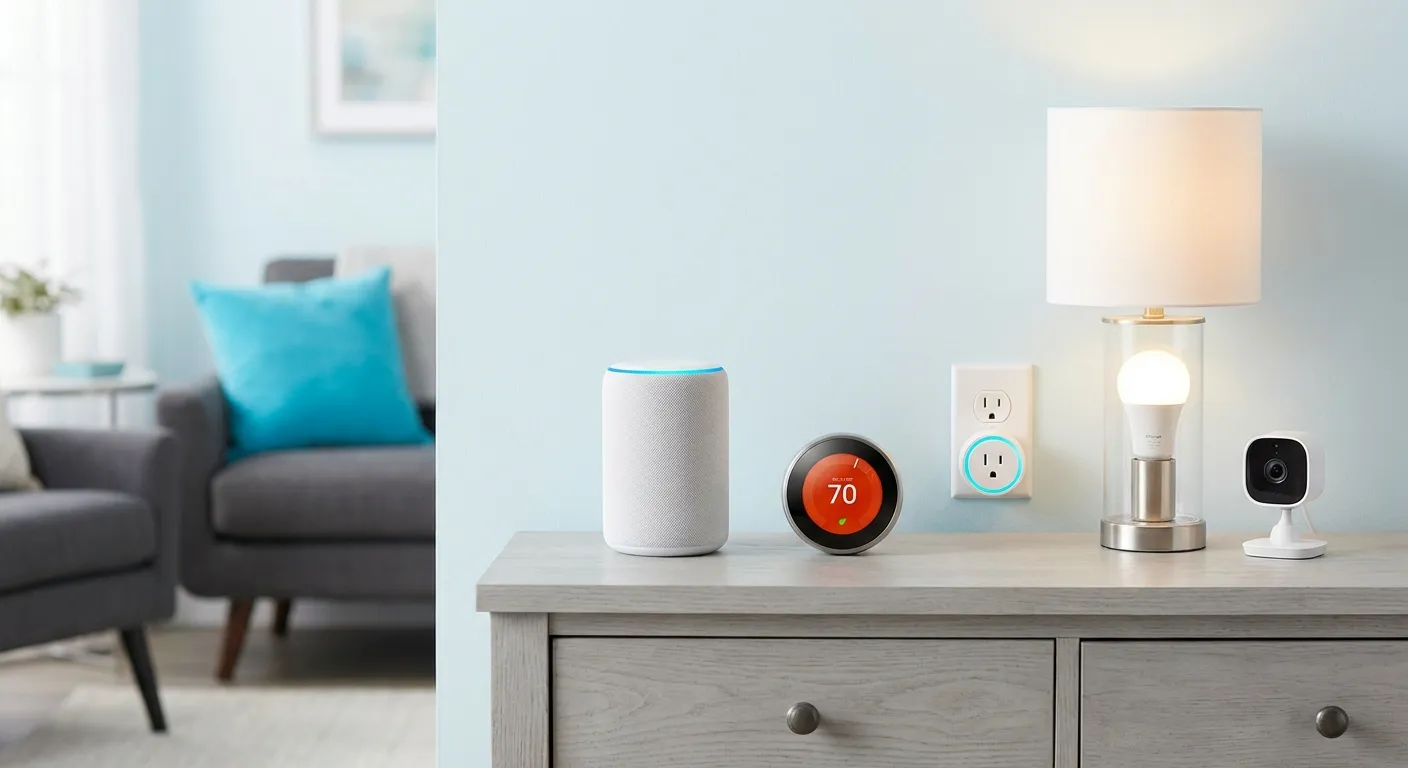
Stepping into the world of smart home technology can seem daunting, but it doesn’t have to be. For smart home devices beginners, the key is to start with simple, impactful gadgets that offer immediate benefits without complex setups. These devices can enhance convenience, security, and energy efficiency, making daily life a little bit easier. Furthermore, they provide a foundation for building a more connected living space.
Understanding where to begin is crucial for a positive experience. Many new users worry about compatibility or intricate installations. However, modern smart home technology has evolved to be user-friendly, prioritizing straightforward integration into existing homes. This guide will highlight the best options for those just starting out, focusing on ease of use and tangible benefits.
Smart Plugs: The Easiest Entry Point for New Users
Smart plugs are arguably the simplest entry point for anyone exploring smart living. They transform any regular appliance into a smart one, allowing you to control lights, fans, or coffee makers from your phone or with voice commands. Moreover, their installation involves merely plugging them into a wall outlet and connecting them to your home Wi-Fi. This simplicity makes them ideal for smart home devices beginners.
Consider, for example, automating your morning routine. You can schedule your coffee maker to turn on before you wake up, or set lamps to illuminate your home when you’re away. Many smart plugs also offer energy monitoring features, which can help you identify and reduce power consumption. This provides a practical way to save on electricity bills over time. Brands like TP-Link Kasa and Amazon Smart Plug are popular choices due to their reliability and user-friendly apps. They integrate seamlessly with major smart assistant platforms, enhancing their versatility. For more on how technology is evolving, consider Tech Industry Future of Work: What Is Changing?
Smart Light Bulbs: Illuminating Your Home with Simplicity
Smart light bulbs follow closely in terms of ease of use and immediate impact. They offer customizable lighting scenes, dimming capabilities, and scheduling, all controllable via an app or voice commands. Unlike traditional bulbs, smart bulbs provide a spectrum of colors and brightness levels, allowing you to set the perfect ambiance for any occasion. Installation is as simple as screwing in a regular bulb.
Imagine hosting a movie night; you can dim the lights to a warm, soft glow with a single command. Alternatively, you might set bright, cool lighting for a productive workday. Many smart bulbs also support geofencing, meaning they can turn on automatically when you arrive home and off when you leave. This adds another layer of convenience and energy saving. Popular brands include Philips Hue, Sengled, and Wyze, offering diverse features for various budgets. They are excellent smart home devices beginners will appreciate for their visual impact and functional benefits.
Smart Speakers: The Central Hub for Voice Control
Smart speakers, like Amazon Echo or Google Nest, serve as the central hub for voice control within your smart home ecosystem. They play music, set alarms, provide weather updates, and interact with other smart devices, all through simple voice commands. Setting them up usually involves connecting them to your Wi-Fi network and downloading a companion app. This makes them indispensable for coordinating your growing collection of smart gadgets.
Beyond basic controls, these speakers can answer questions, read news headlines, and even tell jokes, making them versatile companions. They are often the first smart device many people purchase, acting as an intuitive gateway to more complex setups. For instance, you can ask your smart speaker to turn on your smart lights or adjust your smart thermostat. This hands-free control simplifies daily tasks significantly. Learning to use a smart speaker is quick, making it one of the best smart home devices beginners can invest in for overall convenience.
Smart Doorbells: Enhancing Home Security Easily
Beyond basic control, smart home technology also extends to security and efficiency. Smart doorbells, for instance, let you see and speak to visitors from anywhere, adding a layer of security even when you’re not home. Many models feature motion detection, sending alerts to your phone when someone approaches your door. This provides peace of mind, whether you’re at work or on vacation.
Installation typically involves replacing your existing doorbell and connecting the new device to your home Wi-Fi. Some models offer battery power, simplifying the wiring process. Furthermore, smart doorbells often include two-way audio and night vision, ensuring clear communication and visibility around the clock. Brands like Ring and Arlo are well-regarded for their reliable performance and robust features. These devices are crucial for anyone looking to bolster their home security, serving as practical smart home devices beginners can easily integrate. You can find more information about security advancements in Smart Architecture: Transforming Modern Cities.
Smart Thermostats: Optimizing Comfort and Energy
Smart thermostats, like those from Ecobee or Nest, learn your preferences and optimize your home’s heating and cooling, saving energy and money. They can detect when you’re home or away and adjust temperatures accordingly, preventing unnecessary energy consumption. This intelligent automation not only enhances comfort but also contributes to significant long-term savings on utility bills. Setting them up might require a bit more attention than a smart plug, but clear instructions and online resources make it manageable.
Many smart thermostats offer remote control via an app, allowing you to adjust your home’s climate from anywhere. Some even integrate with local weather forecasts to pre-heat or pre-cool your home efficiently. The data collected by these devices can provide insights into your energy usage patterns, empowering you to make more informed decisions about your home’s climate control. These are sophisticated yet accessible smart home devices beginners can use to make a tangible difference in their energy footprint. For a deeper understanding of energy efficiency, exploring resources like the ENERGY STAR program for smart thermostats can be beneficial.
Choosing Your First Smart Home Gadgets
When selecting your first smart home gadgets, consider what aspects of your daily life you want to simplify or improve. Do you want better control over your lighting? Are you concerned about home security? Perhaps you aim to reduce your energy consumption. Identifying your primary needs will guide you toward the most relevant devices. Moreover, focusing on devices from the same ecosystem (e.g., all Google Home compatible or all Amazon Alexa compatible) can streamline integration and control.
Starting small and gradually expanding your smart home setup is often the most effective approach. This allows you to become familiar with the technology at your own pace and discover what truly benefits your lifestyle. Many brands offer starter kits that bundle essential devices, providing a convenient way to begin. Furthermore, online tutorials and community forums offer ample support for troubleshooting and setup advice. For those interested in broader technological shifts, reading about Digital Media Publishing: How Content Is Changing might offer interesting parallels.
The Benefits of Embracing Smart Home Technology
Embracing smart home technology brings a multitude of benefits, extending beyond mere convenience. Enhanced security, for instance, provides peace of mind through features like remote monitoring and immediate alerts. Energy efficiency contributes to lower utility bills and a reduced environmental footprint, aligning with sustainable living practices. For more on sustainable practices, refer to Sustainable Travel Tips Without Sacrificing Adventure.
Furthermore, smart homes offer increased accessibility for individuals with mobility challenges, allowing them to control various aspects of their environment with minimal effort. The ability to automate routine tasks frees up valuable time, enabling you to focus on more important activities. Overall, these devices contribute to a more comfortable, secure, and efficient living space, truly making modern life simpler. Therefore, the appeal of smart homes continues to grow for a wide audience, including smart home devices beginners.
Overcoming Common Hurdles for Smart Home Adopters
While the initial setup for many smart home devices is straightforward, some common hurdles can arise for new users. Connectivity issues, for example, often stem from an unstable Wi-Fi network. Ensuring a strong, reliable internet connection is fundamental for seamless operation. Moreover, device compatibility can sometimes be a concern, especially when mixing brands. Checking for platform compatibility (e.g., Google Assistant, Amazon Alexa, Apple HomeKit) before purchasing is always recommended.
Privacy and data security are also valid considerations. Most reputable smart home device manufacturers implement robust security measures, but it is wise to research a brand’s privacy policy. Regularly updating device firmware is another critical step to protect against vulnerabilities. Finally, managing multiple apps for different devices can become cumbersome. However, many smart home platforms now offer centralized control, simplifying the user experience. Addressing these points proactively ensures a smoother journey for smart home devices beginners.
The learning curve for these technologies is generally shallow, meaning most users quickly adapt to controlling their new gadgets. Online resources, including manufacturer websites and tech blogs, provide extensive guides and tutorials. Additionally, user communities often share tips and tricks, helping newcomers navigate their smart home journey. This collective knowledge makes the transition into smart living even easier.
Future Trends in Smart Home Technology
The smart home market is constantly evolving, with new innovations emerging regularly. We are seeing a trend towards greater interoperability, allowing devices from different manufacturers to work together more seamlessly. This will further simplify the setup process and enhance the user experience for smart home devices beginners. Artificial intelligence (AI) is also playing an increasingly significant role, enabling devices to learn and adapt to user behavior with greater precision.
Furthermore, energy efficiency remains a key focus, with smart devices becoming even better at optimizing consumption. The integration of health and wellness features, such as air quality monitoring and sleep tracking, is another exciting development. Imagine a home that not only manages your lights but also helps you maintain a healthier lifestyle. These advancements promise an even more intuitive and beneficial smart home experience in the years to come. For more insights into emerging technologies, reputable sources like CNet’s Smart Home section offer up-to-date information.
Conclusion: Embracing Smart Living with Confidence
Starting with a few key smart home devices can significantly upgrade your living space. They offer a blend of convenience, control, and efficiency that makes them a valuable addition to any modern home, proving that smart living is within everyone’s reach. For smart home devices beginners, the journey begins with simple, effective solutions that provide immediate benefits. By choosing devices like smart plugs, light bulbs, speakers, doorbells, and thermostats, you can gradually transform your home into a more intelligent and responsive environment.
Remember, the goal is to enhance your daily life, not complicate it. With careful selection and a focus on user-friendly options, anyone can successfully integrate smart technology into their home. The future of living is smart, and with these accessible options, you are well-equipped to be a part of it. Enjoy the convenience, security, and savings that come with a connected home.
FAQ
What are the simplest smart home gadgets to start with?
The simplest smart home gadgets for new users typically include smart plugs and smart light bulbs. They offer easy installation and immediate control over everyday appliances and lighting, requiring minimal technical expertise.
How do smart home products improve daily life?
Smart home products improve daily life by offering enhanced convenience through automation, increased security with remote monitoring, and better energy efficiency. They simplify tasks, provide peace of mind, and can help reduce utility costs.
Is a strong Wi-Fi connection necessary for smart home technology?
Yes, a strong and stable Wi-Fi connection is essential for most smart home technology to function correctly. Devices rely on Wi-Fi for communication and control, ensuring seamless operation and responsiveness.
Can I control my smart home devices with voice commands?
Absolutely. Many smart home devices are compatible with voice assistants like Amazon Alexa or Google Assistant, allowing you to control them using simple voice commands through a smart speaker or even your smartphone.
Are smart home devices expensive to set up initially?
The initial setup cost for smart home devices can vary. While some high-end systems are costly, many entry-level gadgets like smart plugs and light bulbs are quite affordable. You can start small and expand your smart home gradually, managing your budget effectively.
What should I consider before buying my first smart home items?
Before buying your first smart home items, consider your primary needs (e.g., convenience, security, energy saving), the compatibility of devices with existing platforms, and the ease of installation. Starting with a clear goal helps in selecting the most suitable products.